메트로人 머니 산업 IT·과학 정치&정책 생활경제 사회 에듀&JOB 기획연재 오피니언 라이프 CEO와칭 플러스
글로벌 메트로신문
로그인
회원가입

    머니

  • 증권
  • 은행
  • 보험
  • 카드
  • 부동산
  • 경제일반

    산업

  • 재계
  • 자동차
  • 전기전자
  • 물류항공
  • 산업일반

    IT·과학

  • 인터넷
  • 게임
  • 방송통신
  • IT·과학일반

    사회

  • 지방행정
  • 국제
  • 사회일반

    플러스

  • 한줄뉴스
  • 포토
  • 영상
  • 운세/사주
국제
기사사진
AK ChemTech Bets on 'Sodium-Ion Batteries' to Escape Slumping Earnings

AK ChemTech Shifts Business Focus to Battery Materials, Targets Growth with Sodium-Ion Battery Hard Carbon AK ChemTech is transitioning its business structure, aiming to position battery materials as a future growth engine. The company is intensifying the development of hard carbon for sodium-ion batteries (SIBs), moving away from its traditional petrochemical-centered operations in an effort to improve profitability through new business areas. According to industry sources on the 29th, AK ChemTech has identified "hard carbon" as a key driver for a turnaround in its performance. The company expects the commercialization of sodium-ion batteries to occur around 2027 and plans to complete factory expansions and cost reductions by 2026. This strategy reflects optimism that growing demand for alternatives—spurred by instability in the lithium supply chain and soaring prices—will favor sodium-ion batteries as a promising option. In battery operation, ions move between the anode and cathode during charging and discharging. While lithium ions are small, sodium ions are larger, requiring hard carbon with a wider lattice structure to accommodate their movement. Adding to market expectations, CATL—the world’s largest EV battery maker—recently unveiled a next-generation sodium-ion battery with performance similar to lithium iron phosphate (LFP) batteries, significantly boosting optimism for the sector. Sodium-ion batteries are generally cheaper and safer than conventional lithium-ion batteries, but have traditionally been criticized for shorter lifespan and longer charging times relative to weight. However, CATL’s technological breakthroughs addressing these shortcomings are expected to accelerate the adoption of sodium-ion batteries. Against this backdrop, AK ChemTech—the only domestic company currently mass-producing materials for sodium-ion batteries—could benefit from mid- to long-term market growth. AK ChemTech has been grappling with sluggish earnings since 2023. Last year, the company's consolidated revenue stood at KRW 1.6422 trillion, while operating profit was KRW 15.4 billion, down 66% year-on-year. Despite weak performance, AK ChemTech has been investing heavily in production capacity, allocating about KRW 100 billion to build a plant for TPC, a core material for aramid fiber production. As a result, rising depreciation costs are expected to increase fixed cost burdens, potentially weakening the company's operating leverage effect. Financial expenses have also risen, totaling approximately KRW 18.8 billion last year—an 18% increase year-on-year—posing another threat to profitability. Given these factors, the company’s first-quarter performance is anticipated to remain sluggish. Industry insiders believe that the success of AK ChemTech’s hard carbon business, driven by growing demand for sodium-ion batteries, will be a critical factor in determining its performance recovery. An industry official stated, "AK ChemTech is attracting attention as the only domestic manufacturer of hard carbon anode materials for sodium-ion batteries," adding, "However, the company's ability to secure profitability and enhance technological competitiveness will be crucial to achieving meaningful business success." ChatGPT를 사용하여 번역한 기사입니다.

2025-04-29 16:27:23 메트로신문 기자
기사사진
"Hydrogen FCEVs Approach 50,000 Units; Charging Infrastructure Expansion Urgently Needed"

Demand Grows for Urban Hydrogen Charging Stations as Korea’s FCEV Fleet Nears 40,000 Units With the number of hydrogen fuel cell electric vehicles (FCEVs) in South Korea approaching 40,000, calls are mounting for an expansion of urban hydrogen refueling infrastructure. FCEVs, often dubbed the "ultimate eco-friendly vehicles," emit only water instead of exhaust gases. Globally, only three brands—Hyundai Motor from Korea and Toyota and Honda from Japan—have launched mass-produced passenger FCEVs. As many countries face a temporary stagnation in battery electric vehicle (BEV) demand, interest in hydrogen vehicles continues to rise. According to industry sources on the 28th, as of the end of March, the cumulative number of FCEVs in South Korea stood at 39,216 units. Given that government subsidies have been confirmed for over 13,000 FCEVs this year, the industry expects the cumulative figure to surpass 50,000 by year-end. The domestic hydrogen vehicle market began in earnest with the launch of Hyundai’s Nexo in 2018. Cumulative sales surpassed 10,000 units in 2020 and reached around 30,000 units by 2023. This year, with the release of the Nexo’s successor, "The All-New Nexo," and the Ministry of Environment allocating KRW 721.8 billion in subsidies for more than 11,000 hydrogen passenger cars and 2,000 hydrogen buses, the industry projects that FCEV adoption will accelerate beyond the 50,000 mark. However, the underdeveloped hydrogen infrastructure remains a major obstacle to wider adoption. Industry officials emphasize that in order to build a viable hydrogen ecosystem, support measures such as helping refueling station operators secure urban sites, offering tax benefits to ease financial burdens, and easing permit regulations are urgently needed. As of the end of this month, there are a total of 218 hydrogen refueling stations installed nationwide. A hydrogen industry expert noted, "Some urban hydrogen stations have introduced a reservation system to reduce users' charging wait times," but added, "To popularize hydrogen vehicles, charging infrastructure must be expanded so that users can operate their vehicles as smoothly as internal combustion engine cars in daily life." Recently, Hyundai Motor developed a “high-pressure mobile hydrogen refueling station,” which is expected to help accelerate the expansion of urban hydrogen infrastructure. Meanwhile, there is also an urgent need for government and local authorities to support refueling station operators by helping them secure urban sites and providing tax incentives to ease financial pressures. Some experts argue that establishing a dedicated national agency to stabilize the hydrogen supply chain is necessary. Currently, multiple ministries and organizations—including the Ministry of Trade, Industry and Energy, the Korea Petroleum Quality & Distribution Authority, and the Korea Gas Corporation—are involved in managing the hydrogen distribution network. However, there is no single entity overseeing the entire supply chain to stabilize hydrogen energy prices. By contrast, countries like the U.S. and China have national agencies dedicated to this task. A hydrogen industry specialist stated, "If hydrogen stations were prioritized for installation at public offices, government agencies, and state-owned enterprises nationwide, the number of urban stations could increase significantly." They added, "Expanding urban hydrogen infrastructure would not only drastically improve convenience for FCEV users but also boost user numbers, leading to better financial conditions for station operators and accelerating further expansion." On a global scale, with hydrogen vehicle adoption expanding, the International Energy Agency (IEA) announced plans to publish separate statistics for hydrogen fuel cell vehicles starting this year. Previously, FCEVs were categorized together with battery electric vehicles (BEVs) in IEA reports, making it difficult to track hydrogen vehicle sales. However, beginning with the "2025 World Energy Outlook" to be released this November, hydrogen vehicle statistics will be published separately. ChatGPT를 사용하여 번역한 기사입니다.

2025-04-28 17:04:51 메트로신문 기자
기사사진
LG Electronics CEO Cho Joo-wan: "Tariff Impact to Begin in Q2... Building a U.S. Plant Is a Last Resort"

LG CEO Hints at Possible Price Hikes as U.S. Tariff Impact to Intensify in Q2 Expansion of U.S. production facilities considered only as 'last resort' Cho Joo-wan, CEO of LG Electronics, suggested that the impact of U.S. tariff policies would become significant starting from the second quarter and hinted at the possibility of raising product prices if necessary. However, he emphasized that expanding local production facilities in the United States would be considered only as a “last resort,” expressing a cautious stance. According to industry sources on the 27th, Cho spoke with reporters on April 24 prior to delivering a special lecture to the Department of Electrical and Computer Engineering at Seoul National University. He said, "If the tariff hikes exceed the level we can absorb, we may consider raising the prices of home appliances destined for the U.S. market." He further explained, "Whether the tariffs worsen or improve our performance, the effects will start from the second quarter," noting that the so-called "pull-in effect"—early stocking before tariff enforcement—was not prominent in the first quarter. Regarding potential price hikes, Cho stated, "For some products, it will be necessary," adding, "We will absorb as much of the tariffs as possible through operational efficiency and inventory management." However, he stressed again, "If the level of tariff hikes surpasses what we can endure, price increases will be considered." Cho’s remarks suggest that while LG can absorb a basic 10% tariff through internal efficiencies such as streamlining operations and rotating inventory, significant increases beyond that threshold would likely lead to price hikes. Currently, LG Electronics manufactures washing machines and dryers at its Tennessee plant in the U.S., while refrigerators, cooking appliances, and TVs are produced in Mexico, and refrigerators and washing machines are manufactured in Vietnam. LG is preparing multiple scenarios to cope with potential reciprocal tariffs, including expanding U.S. production, leveraging its global manufacturing network, and raising product prices. Although the Trump administration has so far postponed country-specific reciprocal tariffs, a basic 10% tariff has been imposed on all countries. However, Cho reiterated that relocating production or expanding plants would be a last resort, stating, "Building a U.S. production base should be the very last option," and adding, "We should first respond step-by-step through production site adjustments or price hikes." Earlier, during its first-quarter earnings conference call held on April 24, LG Electronics had also stated, "We will maximize the use of our production sites in Mexico and the U.S. to minimize tariff impact," and "Secure cost competitiveness through a flexible global production network." Meanwhile, LG Electronics posted consolidated first-quarter sales of KRW 22.7398 trillion and an operating profit of KRW 1.2591 trillion. As Cho warned, concerns are rising that second-quarter results could weaken due to the full-fledged impact of global trade policy shifts, including the U.S. tariff increases. ChatGPT를 사용하여 번역한 기사입니다.

2025-04-27 16:55:48 메트로신문 기자
기사사진
프란치스코 교황 장례식, 바티칸서 엄수…전 세계 애도 물결

88세로 선종한 프란치스코 교황의 장례식이 바티칸 현지에서 26일 오전 10시(현지시간) 성 베드로 광장에서 엄숙하게 거행된다. 선종 후 23일부터 25일까지 성 베드로 대성당에서는 일반인들을 위한 조문이 진행되며, 전 세계 수많은 신자와 시민들이 마지막 인사를 위해 모여들고 있다. 이번 장례는 단장을 맞은 조반니 바티스타 레 추기경 장례 미사로 진행되며, 이후 교황의 시신은 이탈리아 로마 에스퀼리노 언덕의 산타 마리아 마조레 대성전으로 운구되어 안장된다. 150여 개국에서 1000여 명의 공식 사절단이 참석하여 프란치스코 교황을 추모할 예정이다. 27일부터 5월 4일까지 성 베드로 대성당에서는 9일간에 걸친 추모 미사가 열린다. 바티칸과 로마 현지에서는 프란치스코 교황의 선종 소식에 깊은 애도의 감정이 드리워졌다. 현지 시민들과 신자들은 교황의 선종을 안타까워하며, 그가 가난한 자와 소외된 이웃을 위해 헌신했던 삶을 기억하고 있다. 일반 조문이 시작된 첫날부터 길게 이어진 조문 행렬은 성 베드로 대성당 주변 1km 이상을 기록했으며, 신도들은 차분하면서도 진심 어린 마음으로 마지막 인사를 전하고 있다. 특히 프란치스코 교황이 선호했던 간소하고 겸손한 장례 방침에 따라 장례식 절차가 엄숙하게 진행되고 있어, 현지인들 사이에서 깊은 존경심을 불러일으키고 있다. 교황청은 교황의 유언에 따라 특별한 장식 없이 간소한 묘지를 조성해 조용한 안식을 도모하고 있다. 프란치스코 교황은 12년간 가톨릭을 이끌며 인류애와 평화를 강조해 왔고, 그의 장례식은 올림픽급 외교 행사로 평가받고 있다. 각국 정상들이 총집결하는 이번 장례식은 전 세계가 교황의 생애와 업적을 기리는 자리로, 국제 사회도 깊은 애도의 뜻을 표하고 있다.

2025-04-25 11:15:05 최규춘 기자
기사사진
중국 유인우주선 선저우 20호, 톈궁 우주정거장 도킹 성공…6개월 임무 돌입

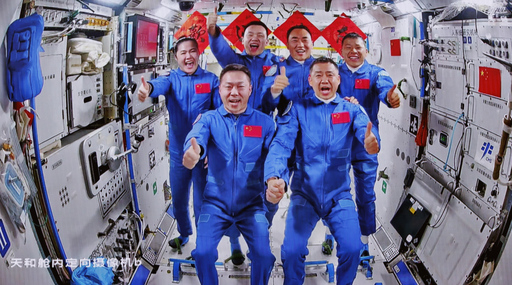
중국이 자체 개발한 유인우주선 선저우(神舟) 20호가 24일 발사된 뒤 약 6시간 30분 만에 중국이 2022년에 완공한 우주정거장 '톈궁(天宮)'에 도킹하는 데 성공했다. 선저우 20호는 이날 오후 5시 17분 중국 간쑤성 주취안 위성발사센터에서 창정-2F 로켓에 실려 발사되었으며, 발사 약 6시간 30분 후 톈궁 우주정거장에 도킹했다. 이번 임무에는 사령관 천둥(陳冬)과 우주 엔지니어 출신 천중루이, 공군 조종사 출신 왕제 등 남성 우주인 3명이 탑승해 우주정거장에 6개월간 장기 체류하며 과학 연구 등 다양한 임무를 수행할 예정이다. 중국 유인우주탐사프로젝트판공실(CMSA)은 "선저우 20호의 궤도 진입과 우주정거장 도킹이 모두 성공적으로 이루어졌다"며 이 임무가 중국 우주항공 기술의 중요한 이정표임을 밝혔다. 이번 선저우 20호의 임무는 독자 개발한 우주정거장 톈궁을 활용하는 장기 체류 우주 임무로, 중국의 우주 탐사 역량과 지속 가능성을 높이는 데 기여할 것으로 기대된다. 현지에서는 발사 당일 우주인들이 발사 전 주취안 위성발사센터에서 창정-2F 로켓에 탑승하기 전 손을 흔드는 모습이 포착되는 등 현장 분위기는 매우 고조되었다. 이번 성공적 발사는 1970년 중국의 첫 인공위성 발사 이후 지속된 중국 우주 개발 역사의 새로운 장을 열었다는 평가를 받고 있으며, 앞으로도 중국은 톈궁을 중심으로 한 우주 과학 및 기술 연구를 확대해나갈 계획이다

2025-04-25 11:04:59 최규춘 기자
기사사진
Samsung Returns to New York After 3 Years for ‘Unpacked’… Galaxy Z Flip and Fold 7 to Debut in July

Samsung to Host Galaxy Unpacked Event in New York for the First Time in 3 Years Galaxy Z Flip 7 and Z Fold 7 expected to debut this July Samsung Electronics is set to hold its second-half "Galaxy Unpacked" event in New York this July, marking the first time in three years that the tech giant has hosted the event in the U.S. The spotlight is expected to be on its next-generation foldable smartphones—the Galaxy Z Flip 7 and Galaxy Z Fold 7. According to the IT industry on the 24th, Samsung has begun preparations to hold the Unpacked event in early July in New York. Given the company’s tradition of hosting the event on a Wednesday (local time), July 2 or July 9 are considered the most likely dates. Last year, Samsung held the "Galaxy Unpacked 2024" event in Paris, France, on Wednesday, July 10 (local time), reinforcing this scheduling pattern. This year’s choice of New York as the event location marks a return since the launch of the Galaxy Z Fold 4 and Z Flip 4 in 2022. In 2023, Samsung hosted the event in Seoul, and last year in Paris—both globally recognized cultural hubs. The decision to return to New York this year is interpreted as a strategic move to strengthen its presence in the North American market. According to market research firm Counterpoint Research, in the fourth quarter of last year, Apple held a 65% share of the U.S. smartphone market, while Samsung stood at 18%. Despite the wide gap, the U.S. remains a critical market that Samsung cannot afford to overlook, given its role as a global trendsetter. At this year’s Unpacked event, Samsung is expected to unveil the Galaxy Z Flip 7 and Galaxy Z Fold 7. According to U.S. tech media and well-known IT tipsters, both models will feature a slimmer, lighter design and enhanced performance compared to their predecessors. The Z Flip 7 is expected to have a larger external display with narrower bezels, while the Z Fold 7 will reportedly be over 1mm thinner and offer an improved crease on its foldable screen. In addition to hardware upgrades, the new devices will also feature enhanced AI-based functionalities. Since last year, Samsung has integrated AI features into its foldable phones, and the upcoming 7 series is expected to deliver a foldable-optimized AI experience. Beyond the Z series, there is growing speculation about the possible unveiling of several other devices, including the Galaxy Watch 8 series, the budget-friendly foldable phone dubbed the Galaxy Z Flip FE, a tri-fold phone tentatively called the “G Fold,” and “Project Infinity,” a headset dedicated to extended reality (XR). However, industry watchers believe these devices are more likely to be introduced at a year-end or separate event. A Samsung Electronics official stated, “Nothing has been officially confirmed yet regarding the Unpacked schedule or the product lineup.” ChatGPT를 사용하여 번역한 기사입니다.

2025-04-24 17:00:47 메트로신문 기자
기사사진
"China's Rare Earth Sanctions Begin in Earnest... Korean Industry Scrambles to Tackle 'Supply Chain Shock'"

As tensions between the U.S. and China intensify, China appears poised to escalate its rare earth export restrictions, signaling a shift in the U.S.-led tariff war toward a new phase of "mineral weaponization." In response, the industrial sector is scrambling to stockpile materials and secure raw resources in anticipation of potential supply chain disruptions. There is growing consensus within and beyond the industry that reducing dependence on Chinese rare earths and enhancing the government's balanced diplomacy and strategic negotiating power are essential. According to industry sources on the 23rd, China’s Ministry of Commerce announced earlier this month export control measures on seven types of medium rare earths, including samarium and gadolinium, as well as permanent magnets made from these materials. Notably, Chinese authorities reportedly sent warning letters to Korean firms, stating that any products manufactured using Chinese rare earths and exported to U.S. companies could be subject to sanctions—raising concerns of a “secondary boycott” as the U.S.-China power struggle broadens. Data from the Korea International Trade Association (KITA) shows that China is the world’s top producer of rare earths, accounting for 69.2% of global output. The International Energy Agency (IEA) estimates that China controls nearly 90% of global rare earth processing and refining. South Korea is highly dependent on Chinese imports for its rare earth needs, with 79.8% of rare earth imports last year sourced from China. Rare earth elements are critical to future industries such as batteries, advanced weapons, and semiconductors. This has raised concerns across the industrial spectrum, particularly in defense and battery manufacturing. Defense companies may face shortages of rare metals used in aircraft structures and engines, while key battery materials are also vulnerable to supply chain risks. More than half of the 17 rare earths used in secondary battery components are imported from China. The defense industry is focusing on maintaining appropriate raw material inventories, while domestic battery companies believe their existing reserves will shield them from immediate impact. However, growing volatility in raw material prices is prompting companies to more precisely assess and secure optimal stock levels. Rare earth prices have surged twice over the past decade. According to Bloomberg, prices spiked to $14,000 per ton in 2011 (approximately KRW 19.8 million), and again to about $11,500 (KRW 21 million) between 2021 and 2022. Both surges were triggered by Chinese export restrictions, raising the likelihood of a similar price hike this time. The industry is closely watching whether these restrictions will evolve into broader global supply chain realignments. As the U.S. seeks to diversify rare earth sourcing, there is speculation that South Korea may become integrated into America’s strategic supply chain plans. LS Eco Energy is currently operating a task force—including executives from management support—to pursue its rare earth business, with plans to recruit additional personnel for rare earth trading. POSCO International is aggressively pursuing U.S. rare earth supply deals, having signed a strategic agreement in March with Energy Fuels, America’s largest rare earth company, for the delivery of didymium-praseodymium oxide. Some experts argue that if substitutes for rare earths are developed over the long term, China’s ability to use them as a strategic weapon will diminish. Seo Ji-yong, professor of business administration at Sangmyung University, emphasized, “The government must ensure that Korean companies are protected in negotiations with China and should maintain a neutral diplomatic stance whenever possible.” He added, “The U.S. sees value in South Korea strategically when it is able to mediate or negotiate effectively with China. Excessive reliance on the U.S. could weaken our position as a negotiation partner.” Professor Seo further noted, “Companies must work to enhance their own strategic value, while the government should build trust with China by keeping open channels for negotiation—while also maintaining a smooth partnership with the U.S.” ChatGPT를 사용하여 번역한 기사입니다.

2025-04-23 16:48:18 메트로신문 기자
기사사진
트럼프 "대중 관세 인하" 시사…배경·시기·기대 효과는?

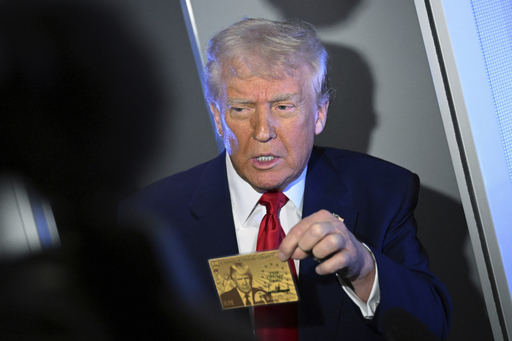
도널드 트럼프 미국 대통령이 중국산 수입품에 부과된 고율 관세를 인하할 방침을 공식적으로 시사했다. 22일(현지시간) 트럼프 대통령은 "현재 145%까지 올라간 대중국 관세율이 꽤 많이 내려갈 것"이라며, "하지만 0%까지는 아니고, 일정 수준은 유지할 것"이라고 밝혔다. 그간 무역전쟁을 주도했던 트럼프 대통령이 관세 정책의 전환 신호를 보낸 것이다. 미국의 대중국 관세 인하는 ▲미국 내 기업 부담 완화 ▲소비자 물가 안정 ▲미중 무역 협상 재개라는 세 가지 요인에서 비롯됐다. 먼저, 미국 내 기업, 특히 중소기업은 중국산 부품과 원자재에 의존도가 높아, 145%에 달하는 고율 관세는 생산비 인상과 경영 악화로 이어졌다. 미중 무역 전쟁이 장기화되자 미국 내 소비자 물가도 상승 압력을 받았으며, 이는 인플레이션 부담을 가중시키는 요인이 됐다.또한 트럼프 대통령은 최근 들어 협상 태도를 한층 부드럽게 바꾸고, "미중이 함께 잘 지내며 협력하게 될 것"이라며, 시진핑 중국 국가주석과 대화를 강조했다. 관세 전쟁을 일방적으로 고수하기보다는, 실질적 이익과 양국 관계 개선을 동시에 노리는 전략으로 분석된다. 트럼프 대통령은 관세 인하의 정확한 시기는 밝히지 않았다. 다만 "향후 3~4주 내로 협상이 마무리될 것"이라고 밝혀, 빠르면 한 달 내 관세 인하와 관련한 구체적 방안이 공개될 것으로 전망된다4. 현재 중국산 제품에 대한 125~145% 관세가 이미 적용 중이며, 관세 인하는 양국 협상 진전에 따라 확정될 것으로 보인다. 관세 인하가 이루어질 경우, 가장 직접적인 효과는 미국 내 소비자 가격이 인하되고, 기업의 원가 부담이 줄어든다는 점이다. 미국 소비자들은 중국산 생활필수품, 공산품 등을 더 저렴하게 구입할 수 있고, 기업들은 생산비 부담 감소로 경쟁력을 회복할 수 있다. 이는 최근 하락 추세인 인플레이션을 더욱 안정시키는 데도 도움이 된다. 또한 양국 무역 전쟁의 불확실성이 완화되면서 글로벌 금융시장 안정과 미중 관계 개선도 기대된다. 미국 내 중소기업이 특히 수혜를 입을 것으로 분석되며, 중국 역시 대미 수출 일부 회복 효과를 얻을 수 있다. 트럼프 대통령의 대중 관세 인하 방침은 미국 경제 내부의 부담 완화와 미중 협상 국면 전환이라는 실리적 판단이 맞물린 결과다. 향후 협상 추이와 구체적 실행 방안에 전 세계가 주목하고 있다.

2025-04-23 10:49:16 최규춘 기자