메트로人 머니 산업 IT·과학 정치&정책 생활경제 사회 에듀&JOB 기획연재 오피니언 라이프 CEO와칭 플러스
글로벌 메트로신문
로그인
회원가입

    머니

  • 증권
  • 은행
  • 보험
  • 카드
  • 부동산
  • 경제일반

    산업

  • 재계
  • 자동차
  • 전기전자
  • 물류항공
  • 산업일반

    IT·과학

  • 인터넷
  • 게임
  • 방송통신
  • IT·과학일반

    사회

  • 지방행정
  • 국제
  • 사회일반

    플러스

  • 한줄뉴스
  • 포토
  • 영상
  • 운세/사주
국제
기사사진
"Listen with AI, understand the space"… LG Electronics unveils 3 new 'LG XBOOM' models with will.i.am.

LG Electronics has teamed up with global musician will.i.am to launch the AI-based wireless audio brand 'LG XBOOM' as part of its strategy to target the global audio market. On the 7th, LG held the 'LG XBOOM Brand Day' at the multi-purpose cultural space Ground 220 in Yeongdeungpo-gu, Seoul, where it introduced three new products: the ▲120W high-output 'XBOOM Stage 301', the ▲stereo sound and stylish 'XBOOM Bounce', and the ▲compact and portable 'XBOOM Grab'. All three products are powered by AI-based 'Smart Sound' technology. 'AI Space Recognition Sound' analyzes the size of the room, furniture arrangement, and wall materials to evaluate sound reflection or absorption, automatically adjusting to the optimal sound balance. The 'AI Sound & Lighting' function optimizes speaker lighting and sound field in real-time to match the music genre being played. Each product has distinct usability. The 'XBOOM Stage 301' features 120W high output, a 6.5-inch woofer, and a battery capable of up to 12 hours of playback, delivering rich sound even in large spaces. The 'Bounce' is optimized for outdoor activities with its bouncing passive radiator and magic strap, while the 'Grab' is highly portable, fitting into a bicycle water bottle holder. The Grab also won the 2025 iF Design Award. The use cases for each product are also distinct. The 'XBOOM Stage 301' is optimized for party or concert environments with its 120W high output, 6.5-inch woofer, and a battery that lasts up to 12 hours. The 'XBOOM Bounce' features a dynamic design with a top passive radiator that bounces in response to music, making it ideal for outdoor activities with its magic strap that can be worn over the shoulder. The 'XBOOM Grab' combines portability, fitting into a bicycle water bottle holder, and has proven its design competitiveness by winning the 2025 iF Design Award. At the heart of this brand renewal is will.i.am. He is a member of the world-renowned pop group The Black Eyed Peas and the CEO of the AI radio app 'RAiDiO.FYI'. He participated as the 'Experiential Architect' for the XBOOM brand, playing a key role in product design, sound concept, and marketing. He stated, "Speakers are not just machines that produce sound; they are about creating experiences," and emphasized, "We focused on breaking the existing mold." will.i.am also revealed plans to integrate RAiDiO.FYI with XBOOM. The AI will analyze users' music preferences and news interests to recommend content in real-time and respond to voice commands, creating an 'interactive audio system'. Starting with XBOOM, LG Electronics plans to segment its audio brand into portable, wearable, and home audio categories, expanding its product lineup to match customers' lifestyles. Currently, LG's audio business revenue is around 700 to 800 billion won, less than 1% of its total revenue. With the launch of XBOOM, LG aims to redefine its audio business identity, focusing on portable audio to expand and achieve revenue in the trillions of won. Lee Jung-seok, Executive Vice President of LG Electronics' MS Business Unit and Head of the Audio Business, stated, "LG XBOOM is an audio brand that combines technology and culture, and together with will.i.am, we will showcase innovations in audio technology, enriching the listening experience for customers." ChatGPT를 사용하여 번역한 기사입니다.

2025-04-08 16:36:02 메트로신문 기자
기사사진
트럼프, 모든 나라 상호관세 발효 90일간 유예? "가짜 뉴스" 일침

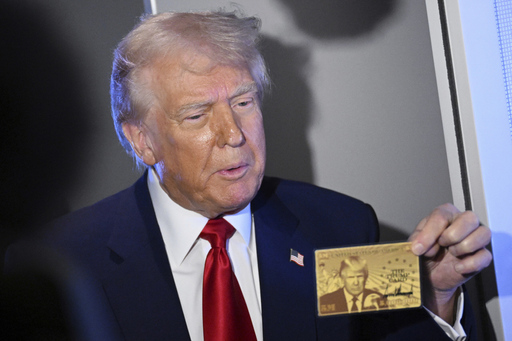
도널드 트럼프 미국 대통령은 미 무역적자국들을 중심으로 발표한 상호관세 적용을 유예하지 않을 것이라고 7일(현지 시간) 밝혔다. 트럼프 대통령은 이날 백악관 집무실에서 베냐민 네타냐후 이스라엘 총리와 회담한 후 '협상을 위해 상호관세 발효를 유예할 의사가 있느냐'는 취재진 질문에 "우리는 그것을 고려하지 않고 있다"고 답했다. 이날 일부 미국 언론들은 백악관이 9일 예정된 상호관세 발효를 90일간 유예하는 방안을 검토 중이라고 보도했다. 케빈 해싯 백악관 국가경제위원회(NEC) 위원장이 폭스뉴스 인터뷰에서 90일 유예안을 검토할 것이냐는 질문에 "트럼프 대통령이 이를 결정할 것으로 생각한다"고 답한 것이 '유예 검토'로 해석된 것이다. 하지만 캐롤라인 레빗 백악관 대변인이 즉각 "가짜 뉴스"라고 반박했고, 트럼프 대통령도 직접 유예를 고려하지 않는다고 선을 그었다. 이에 따라 한국에 부과한 25% 상호관세도 오는 9일부터 정상 발효될 가능성이 매우 높다. 트럼프 대통령은 지난 2일 모든 국가를 대상으로 최소 10% 관세를 일괄 적용하는 행정명령에 서명했다. 기본관세 10%는 지난 5일부터 발효됐고 무역적자국을 중심으로 도입한 상호관세는 오는 9일 오전 0시1분부터 적용된다. 한국 정부는 정인교 산업통상자원부 통상교섭본부장을 오는 8일 급파해 협상에 나설 방침이지만, 일단 관세가 발효되고 본격적인 협상이 이뤄질 전망이라고 뉴시스가 전했다. 트럼프 대통령은 이날 "많은 국가들이 협상을 하러 오고있으며, 공정한 거래가 이뤄질 것이다"며 "경우에 따라 그들은 상당한 관세를 지불해야할 것이다"고 말했다.

2025-04-08 11:09:40 최규춘 기자
기사사진
"Declaration of the 'Personalized AI TV Era'… Samsung Electronics unveils '2025 AI TV'"

Samsung Electronics unveiled a wide range of AI-based 2025 TV models, marking the beginning of the "personalized TV era." The strategy goes beyond simple video viewing by understanding users' preferences and lifestyles to offer new experiences. On the 7th, Samsung held the 'Unbox & Discover 2025' event in Seocho-gu, Seoul, where the company revealed its next-generation AI TV lineup. Key themes include ▲AI-based personalization ▲Expansion of large and mobile screens ▲Differentiated viewing environments. Yong Seok-woo, President of Samsung Electronics' Visual Display Business, stated, "The vision for AI that Samsung envisions is to act as a companion, making daily life easier and more convenient for users," and added, "We will open a new world of experiences that existing screens could not offer, exceeding consumer expectations." ◆Smarter TV with AI features… understands your daily life. Samsung's AI TV consists of three features: 'AI Home', 'AI Assistant', and 'AI Viewing Optimization.' 'AI Home' includes 'Home Insights', which analyzes the user's lifestyle patterns, device usage history, and indoor environment to automatically suggest the operation of appliances such as air conditioners and air purifiers. 'Home Monitoring' in AI Home sends real-time alerts if unusual movements are detected while the user is away. It also includes 'Pet & Family Care', which detects pet or baby cries, enhancing safety. The 'AI Assistant' offers features like 'Real-time Subtitle Translation' and 'Click to Search', which provides recommendations for similar content to what’s being watched, as well as information about cast members and the program. Additionally, the 'AI Viewing Optimization' function upscales low-resolution content to high definition and automatically applies a 'Remastering' feature to enhance details, depth, and contrast based on the scene. ◆AI TV lineup expanded significantly to 61 models… strengthening ultra-large and mobile options. Samsung Electronics has significantly expanded its AI TV lineup, growing from 9 series and 34 models last year to 14 series and 61 models this year. In the OLED category, the SF90 series now offers a lineup ranging from 42-inch to 83-inch models, while the Neo QLED series has added ultra-large models, with new 115-inch and 100-inch models joining the 98-inch model. Additionally, 'Moving Style', which combines a moving stand with existing smart monitors, has been expanded to models up to 55 inches, enhancing mobility and versatility. The ultra-short throw projector, 'The Premiere 5', which supports touch interaction, is also introduced as the first in the industry to provide a large 100-inch screen at a distance of just 43 cm. The 'Samsung Art Store' subscription service has been expanded to include the 2025 Neo QLED and QLED models, offering access to approximately 3,000 works from world-renowned museums in 4K resolution. The 'Wireless One Connect Box' and 'Glare Free' technology provide a cleaner installation environment and a glare-free viewing experience. Soundbar performance has also been improved. The 2025 'Q Series' reduces the subwoofer size by 58% compared to previous models while delivering powerful bass. The newly launched 'Convertible Soundbar' features a built-in gyro sensor that detects installation direction and automatically optimizes sound. Whether placed on a stand or mounted on the wall, it provides immersive surround sound with features like Dolby Atmos and Q-Symphony. Samsung Electronics is running a promotion until the 30th of this month to celebrate the launch of its new products. Buyers will receive up to 3 million Samsung Electronics membership points, along with discounts on items such as soundbars and the Slim Fit Camera. The retail prices for the 2025 Neo QLED 8K models are as follows: for the top series (QNF990), the 98-inch model is priced at 50.4 million won, and the 85-inch model at 16.2 million won. For the Neo QLED QNF95 series, the 85-inch model is priced at 7.89 million won, and the 75-inch model at 6.39 million won. The 115-inch and 100-inch models will be released later. The retail prices for Samsung OLED are as follows: for the SF95 series, the 83-inch model is priced at 12.8 million won, and the 77-inch model at 8.99 million won. The Frame Pro models are priced at 6.49 million won for the 85-inch, 4.89 million won for the 75-inch, and 3.39 million won for the 65-inch. The ultra-short throw projector, The Premiere 5, is priced at 1.99 million won. ChatGPT를 사용하여 번역한 기사입니다.

2025-04-07 16:36:19 메트로신문 기자
기사사진
Korea vs. China battery patent war intensifies... allegations of 'retaliatory lawsuits' arise.

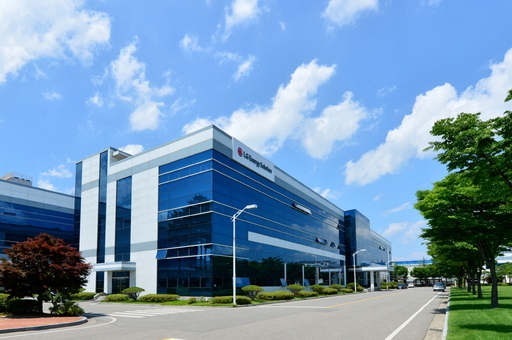
A petition for invalidation of LG Chem's cathode material technology patent has been filed in China, drawing attention to the ongoing dispute over advanced technology patents in the industry. As competition in the global battery market intensifies, conflicts over technology and intellectual property rights that transcend national borders are gradually deepening. According to industry sources on the 6th, a petition for the invalidation of LG Chem's patent on nickel-cobalt-manganese (NCM) cathode technology was recently submitted to China's National Intellectual Property Administration. Although the petitioner is registered as an individual, industry experts suggest that the leading Chinese NCM cathode materials company, 'Longbai,' may be behind the petition. The speculation is strengthened by the fact that LG Chem previously filed a patent infringement lawsuit against Longbai’s South Korean subsidiary, JSE Li, last year. LG Chem alleged that JSE Li was using its NCM cathode material patent without permission to produce and sell products, leading to a lawsuit in the Seoul Central District Court. The industry views this invalidation petition as a form of retaliatory response from China. Patent lawsuits between Chinese and Korean companies continue. Last year, Chinese company SVOLT was embroiled in controversy for allegedly stealing battery technologies from Samsung SDI and SK On. According to the Korea Intellectual Property Office, patent applications related to secondary batteries have been growing rapidly, with an average annual increase of 13% from 2019 to 2023. As battery technology competition intensifies, China has been expanding its influence through aggressive patent filings. Chinese company CATL holds a total of 31,896 patents. Among the major domestic battery companies, LG Energy Solution holds the most patents. As of last year, it owned a total of 28,255 patents, with 13,392 registered domestically and 17,741 registered internationally. Samsung SDI and SK On hold 22,030 and 4,569 patents, respectively. LG Energy Solution has expressed a strong commitment to actively respond to "patent free-riding" targeting China. The company stated that it has identified 580 patents that were actually infringed upon by competitors, emphasizing that it cannot allow market distortion to go unchecked. Kim Dong-myung, CEO of LG Energy Solution, recently mentioned, "We will protect our intellectual property rights and take stern actions against indiscriminate patent infringements." To strengthen its global litigation capabilities, the company plans to secure local experts in the U.S., Europe, and China and expand its overseas IP offices to better manage intellectual property rights. The government is also supporting efforts to enhance patent competitiveness in the battery sector. The Korean Intellectual Property Office (KIPO) designated the secondary battery field as a priority for expedited examination starting in February 2024, focusing on increasing the number of specialized examiners and creating dedicated examination teams to support businesses. An industry insider commented, "As competition in battery technology intensifies, patents go beyond being mere defensive tools and become a means of generating revenue. If a structure is created where companies can receive royalties or control competitors through patents, it will positively impact the companies' profitability." ChatGPT를 사용하여 번역한 기사입니다.

2025-04-06 16:01:27 메트로신문 기자
기사사진
트럼프, 상호관세 이 나라만 피해갔다?...이미 높은 관세 부과

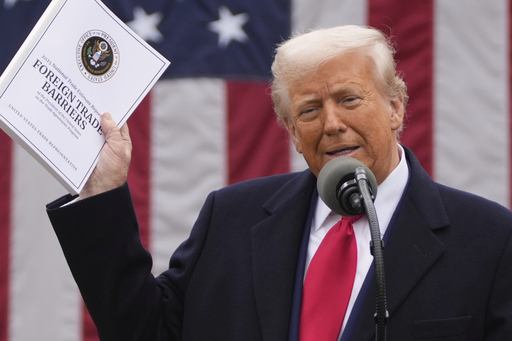
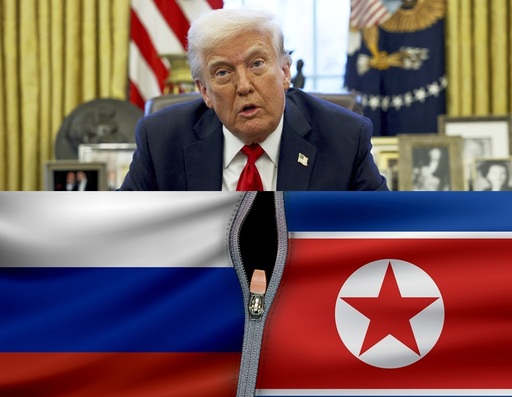
백악관은 3일(현지 시간) 러시아, 북한, 쿠바, 벨라루스 등 이른바 권위주의 국가들에 대해 관세를 부과하지 않은 이유를 설명했다고 미 정치 매체 더힐이 보도했다고 뉴시스가 인용했다. 보도에 따르면 백악관 관리는 이날 더힐에 "이들 4개국은 이미 극도로 높은 관세를 부과받고 있으므로 상호관세 행정명령 대상이 아니며 이미 이전에 부과된 제제로 이들 국가와의 무역은 사실상 금지돼 있다"고 전했다. 이 관리는 트럼프 대통령이 "최근 러시아에 강력한 제재를 가하겠다고 경고했었다"고 주장했다. 북한과 쿠바는 미국 국무부의 테러지원국 리스트에 올라 있다. 미국의 수출통제 및 경제 제재 대상이다. 벨라루스도 인권 문제 등으로 미국의 제재를 받는 나라다. 트럼프 대통령은 우크라이나 전쟁 휴전 협조 여부에 따라 러시아 석유에 '세컨더리 관세'를 부과하겠다고 경고했다. 트럼프 대통령은 지난 2일 모든 국가에 10%의 기본 관세를 부과하고 미국의 무역 적자 폭이 큰 교역 상대국에 추가 세율을 부과하는 상호관세 행정명령에 서명했다. 미국은 중국에 34%의 상호관세를 부과했다. 이는 기존 중국에 적용해 온 20%의 관세를 더하면 중국으로부터 수입되는 제품의 관세는 54%로 급등하게 된다. 이밖에 베트남(46%), 대만(32%), 인도네시아(32%), 캄보디아(49%) 등도 높은 관세를 부과했다. 트럼프 행정부는 한국에 부과하는 상호 관세율을 25%로 확정했다. 당초 백악관 홈페이지에 게재된 행정명령 부속서에는 한국에 대한 세율이 26%로 돼 있었지만 하루 만에 이를 1%포인트 낮춘 것이다.

2025-04-04 10:34:25 최규춘 기자
기사사진
[Trump Tariff Aftershock] Industry on alert… heightened sense of crisis in automotive, semiconductor sectors.

U.S. President Donald Trump announced on the morning of the 3rd (Korean time) that a 10% basic tariff will be imposed on all imports entering the U.S., along with additional reciprocal tariffs on key countries. The announcement included a 25% reciprocal tariff on South Korea, 34% on China, 20% on the European Union (EU), 46% on Vietnam, 32% on Taiwan, and 24% on Japan. Domestic industries, including the automotive sector, are facing what is referred to as a "perfect storm" (a combination of crises). In particular, South Korean companies operating in Vietnam and China are expected to face the highest levels of pressure. ◆Impact inevitable… "Government must negotiate actively" Domestic automakers have avoided reciprocal tariffs, but the imposition of tariffs on imported cars is expected to significantly impact their performance. Last year, South Korea's automobile production totaled 4.13 million units, of which 2.78 million units were exported, accounting for 67% of total production. Of these, 1.43 million units were exported to the U.S. (Hyundai Motor and Kia with 1.01 million units, and GM Korea with 410,000 units), making up 35% of total production and 51% of total exports. The value of U.S. automobile exports was recorded at $34.744 billion (50 trillion won). The industry forecasts that the imposition of tariffs on imported cars could lead to a $6.3 billion (approximately 9 trillion won) decrease in South Korea's automobile export value compared to last year. Hyundai Motor Group, the largest domestic automaker, is also expected to face worsening performance. Industry experts predict that the annual profit decline for Hyundai and Kia could reach 3.4 trillion won and 2.3 trillion won, respectively, due to the tariffs. However, it is expected that costs will decrease significantly if Hyundai Motor Group expands the annual production capacity of its recently launched MetaPlant America (HMGMA) in Georgia from 300,000 to 500,000 units. Hyundai Motor Group operates three plants in the U.S.—the Hyundai Alabama Plant (330,000 units), Kia Georgia Plant (350,000 units), and MetaPlant America (300,000 units)—with a combined production capacity of 1 million units. Kia's CEO Song Ho-sung stated, "40% of the vehicles produced at HMGMA will be Kia vehicles," and regarding concerns about price hikes due to the second Trump administration's tariffs, he said, "We have not reviewed this yet." Separately, GM Korea, which exports 84% of its total production to North America, is facing heightened anxiety due to the "tariff bomb." GM Korea has been increasing sales in the U.S. with value-oriented models like the Trailblazer and Trax, but if tariffs lead to price increases, maintaining sales volumes may become challenging. Some are concerned that, similar to the Gunsan plant, GM Korea may initiate restructuring. Professor Kim Pil-soo of Daelim University's Department of Automotive Engineering said, "While the impact on automakers is inevitable, it is fortunate that the gap with competitor countries like Japan and Europe is not significant." He added, "Since domestic automakers have secured enough resources to withstand up to three months, the government should actively engage in negotiations." He emphasized, "If companies collapse, recovery will be impossible, and the entire industry ecosystem will collapse, so the government and local governments must prepare emergency support measures such as export vouchers, tax benefits, subsidies, and additional budget allocation." ◆Reciprocal tariffs on semiconductors and steel in 'standby mode' Steel and aluminum companies that have already been subjected to tariffs have avoided the duplication of reciprocal tariffs. However, the steel industry remains cautious, as it is closely linked to other industries and is keeping a close watch on the impact of tariffs. The semiconductor industry has been excluded from the reciprocal tariff imposition, providing some relief. However, since the U.S. government has indicated that a minimum 25% tariff will be applied to specific semiconductor items, it is still not a time for complete reassurance. South Korea’s semiconductor exports to the U.S. account for 7.5%, which is relatively lower compared to China (32.8%), Hong Kong (18.4%), and Taiwan (15.2%). However, since semiconductors are often manufactured through multiple countries, there are concerns that the scope and criteria for reciprocal tariffs could result in a larger-than-expected tariff burden. As of now, the specific scope and criteria for applying item-specific tariffs on semiconductors have not been disclosed. Some analysts suggest that since companies like Samsung Electronics and SK hynix lead the production of advanced semiconductors, such as high-bandwidth memory (HBM), and there are no substitutes for these semiconductors, the item-specific tariffs might be reduced. Yuh Han-koo, Senior Researcher at the Peterson Institute for International Economics, is giving a presentation at the seminar titled "How to Respond to Trump's Reciprocal Tariffs?" held at the FKI Tower Conference Center on the 3rd. / Korea Economic Association 4o mini ◆Business community expresses strong concern over U.S. tariff "bomb" The business community has called for future "policy coordination" between the South Korean and U.S. governments in response to the U.S. administration's decision to impose a 25% reciprocal tariff on South Korea. In a statement on the 3rd, the Korea Chamber of Commerce and Industry (KCCI) stated, "The reciprocal tariff policy announced by President Trump is a significant measure that could bring about major changes not only in trade between South Korea and the U.S. but also in the global trade order." It continued, "South Korea and the U.S. have developed a mutually beneficial economic partnership based on the Free Trade Agreement (FTA), and South Korean companies have contributed to the U.S. economy and industrial development through active investments and the creation of quality jobs in key industries such as semiconductors and automobiles." The KCCI also expressed hope that "in the implementation of the reciprocal tariffs, close communication and policy coordination between the governments of both countries will take place based on the trust built over time." The Korea Economic Association (KEA) held an emergency seminar at the FKI Tower in Yeouido, Seoul, to discuss ways to respond to the tariff pressure from the Trump administration. Yuh Han-koo, a senior researcher at the Peterson Institute for International Economics (PIIE) and former head of the Trade Negotiations Bureau at the Ministry of Trade, Industry, and Energy, analyzed that the Trump administration's tariff imposition has a political intention that goes beyond mere protectionism. He stated, "The tariffs are seen as a means to secure revenue for tax cuts," adding, "Compared to the first term, the speed, scope, and scale are much more aggressive." However, he cautioned against excessive concerns that might paralyze the industry, saying, "The basis for calculating the tariffs has not even been disclosed. We should not be swayed by such policy announcements and should keep an eye on the long-term trends." Jo Sung-dae, director of the Trade Research Division at the Korea International Trade Association, stated, "The tariff burden will be greater for industries that compete with U.S. companies." He added, "A 'race' has started with other countries that will be negotiating with the U.S.," and advised businesses to find practical responses such as adjusting production volumes and seeking alternative supply chains. ChatGPT를 사용하여 번역한 기사입니다.

2025-04-03 16:36:58 메트로신문 기자
기사사진
"Return after 2 years?"… Samsung's 'Exynos 2600' rumored to be featured in the Galaxy S26.

Samsung's own application processor (AP), 'Exynos', is making a comeback. After being excluded from flagship smartphones for two consecutive years, Exynos is expected to be featured in the next-generation 'Galaxy S26,' raising industry interest in whether Samsung can regain its AP competitiveness. According to the IT industry on the 2nd, recent information leakster @Jukanlosrev shared on his social media platform X (formerly Twitter), "Exynos 2600 will definitely make a return and will be used in the Galaxy S26." However, he also added that "the chip shipment will be very limited, and it may end up being similar to the Exynos 990 situation." Samsung Electronics had initially planned to include the Exynos 2500 in the Galaxy S25 series released earlier this year, but due to low yield rates in Samsung Foundry's 3-nanometer (nm) process, the company ultimately adopted Qualcomm's Snapdragon 8 Elite chipset entirely. As a result, the Exynos 2500 was excluded from the flagship market, and the performance of the System LSI division reportedly declined. However, there is now a possibility that the Exynos 2600, produced using the next-generation 2-nanometer process (SF2), will be introduced. The Exynos 2600 is designed based on the 2-nanometer process using third-generation Gate-All-Around (GAA) technology. Compared to the existing 3-nanometer process (SF3), it is said to offer a 12% performance improvement, a 25% increase in power efficiency, and a 5% reduction in area. An industry insider explained, "In early tests in February, the yield rate for Samsung Foundry’s 2-nanometer process was about 30%, which was higher than expected." However, they added, "For mass production, a yield rate of at least 60-70% is needed, so there is still a long way to go." In response, Samsung Electronics is said to have formed a special task force (TF) to improve the yield rate of the Exynos 2600. ◆Yield as a variable… possibility of a 'dual strategy' with Exynos and Snapdragon. Industry experts suggest that if the yield of the Exynos 2600 remains limited, Samsung Electronics may adopt a 'regional AP dual strategy,' similar to the approach used during the Exynos 990 era. In fact, when the Galaxy S20 and Note 20 series were released, Samsung equipped the U.S., China, and Canada with Qualcomm Snapdragon processors, while other regions received the Exynos 990. Park Hyun-jung, an analyst at Daishin Securities, stated, "Even if the Exynos 2600 overcomes its yield issues, it is unlikely to be used in all models." She further analyzed, "It is highly likely that the 'Snapdragon 8 Elite 2' chipset will be used in the Galaxy S26 Ultra model and in markets like Korea, North America, and China, while the 'Exynos 2600' will be used in markets like Europe and India." ◆Can Exynos make a full comeback?… Market response is in 'cautious mode'. Exynos has received mixed evaluations in the market, with the processor being adopted and excluded repeatedly in the Galaxy S series. In particular, the Exynos 990 was heavily criticized for performance and heat issues, while the Exynos 2500 was excluded from the Galaxy S25 due to low yield rates, leading to a decline in the performance of the System LSI division. The industry sees the potential for Exynos 2600 to be a crucial turning point for Samsung's AP competitiveness if it can be successfully applied in some models. However, there are still many concerns about challenges that need to be addressed. One expert stated, "If the yield improvement is slower than expected or if the performance does not meet expectations, Samsung's recovery in the AP business could become even more difficult." He further added, "The success of the Exynos 2600 will be a crucial test that will determine the direction of Samsung's semiconductor business." ChatGPT를 사용하여 번역한 기사입니다.
2025-04-02 16:26:13 메트로신문 기자
기사사진
Lee Jae-yong and Koo Kwang-mo accelerate the strengthening of the automotive electronics business… enhancing collaboration with global companies.

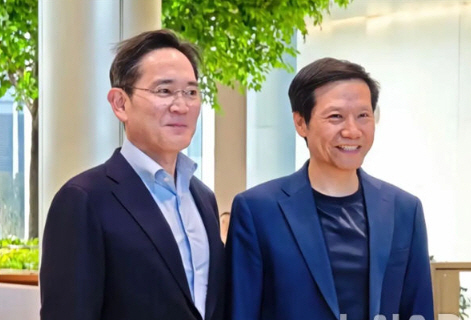
Samsung Electronics Chairman Lee Jae-yong and LG Group Chairman Koo Kwang-mo are actively forming strategic partnerships with global automakers to secure competitiveness in the 'automotive electronics' business, a key future growth area for their groups. In particular, as the automotive industry undergoes rapid electrification and autonomous driving transformations, both the group leaders and management teams of affiliated companies are seeking collaboration opportunities with leading automotive firms to secure market leadership. According to industry sources on the 1st, Lee Jae-yong’s recent business trip to China included key executives from Samsung’s core businesses, such as semiconductors, batteries, and displays. This trip is aimed at strengthening cooperation with companies in China, the world’s largest electric vehicle market, as Samsung Electronics works to enhance its automotive electronics business. On the 22nd, Lee Jae-yong visited Xiaomi’s factory in Beijing and on the 24th, he visited BYD’s factory in southern Guangdong’s Shenzhen, where he met with top executives. In particular, after meeting with Samsung executives, BYD Chairman Wang Chuanfu mentioned that there would be significant changes in the commercialization of autonomous driving technology within the next 2 to 3 years, drawing attention to the potential for building a strong relationship with Samsung Electronics. China is a strategic market closely tied to Samsung Group's core businesses, including semiconductors, batteries, and displays. Samsung Electronics has been operating a NAND flash memory factory in Xi'an, China, since 2014. Samsung Display has been producing small and medium-sized OLED modules in Tianjin and Dongguan, Guangdong, since 1999 and 2004, respectively. Samsung SDI has been manufacturing small batteries for electric vehicles and small IT devices in Tianjin since 2008, and has been running a prismatic battery factory for electric vehicles and energy storage systems (ESS) in Xi'an since 2015. Samsung SDI is also preparing for new investments in the near future. Samsung's local sales and operating profit in China have consistently shown an upward trend. According to Samsung Electronics' business report, last year's revenue from China reached 64.9275 trillion won, a 53.9% increase (approximately 22.7 trillion won) compared to the previous year’s 42.2007 trillion won. On the 27th of last month, LG Group Chairman Koo Kwang-mo convened the first executive meeting of the year and emphasized a sense of "urgency" to overcome the challenges of 2025. The chairman is now focusing on aggressively targeting global automakers. LG Group's core affiliates, including its battery, display, and electronic components divisions, are planning to hold exclusive Tech Days for global automakers starting in June. The heads of each affiliate plan to visit automakers starting with Hyundai Motor and Kia in June, followed by a visit to Honda’s headquarters in Japan in July, where they will showcase their technological capabilities. The delegation will include LG Group Vice Chairman Kwon Bong-seok, LG Electronics President Cho Joo-wan, LG Energy Solution President Kim Dong-myung, LG Display President Jeong Cheol-dong, and LG Innotek CEO Moon Hyuk-soo. The reason why Samsung and LG, the two major pillars of South Korea's electronics industry, are focusing on the automotive electronics (automotive electronics) market is its immense potential. As global automakers accelerate the shift to electrification and autonomous driving, the automotive electronics market is experiencing rapid growth. According to market research firm Strategy Analytics, the global automotive electronics market, which was valued at $400 billion (approximately 552.48 trillion won) last year, is expected to grow to $700 billion (approximately 966.84 trillion won) by 2028. An industry insider commented, "The future of automobiles is evolving so quickly that they are almost becoming rolling electronic devices that enable everything in the vehicle. As the digital transformation of cars accelerates, the competition between Samsung and LG in the automotive electronics business will become even more intense." ChatGPT를 사용하여 번역한 기사입니다.

2025-04-01 15:55:14 메트로신문 기자
기사사진
테슬라 주가 '반토막' 머스크 "지금이 매수 기회"

테슬라 주가 '반토막' 머스크 "지금이 매수 기회" 테슬라 최고경영자(CEO)이자 도널드 트럼프 미국 행정부의 정부효율부(DOGE)를 이끄는 일론 머스크가 테슬라 주가 하락에 대해 자신의 활동 탓이라고 인정하면서도 장기적으로는 문제가 없을 것이라고 언급했다. 현지시간 31일 블롬버그 통신에 따르면 머스크는 전날 저녁 위스콘신주 그린베이에서 열린 주(州) 대법관 선거운동 타운홀 행사에서 DOGE 활동이 "내게 많은 대가를 치르게 하고 있다"며 "매우 비싼 일"(very expensive job)이라고 말했다. 이어 DOGE 활동을 반대하며 테슬라 매장과 차량 등을 공격하는 이들을 일컬어 "그들이 하려는 것은 나와 테슬라에 엄청난 압박을 가하고 이 일을 그만두게 하는 것"이라며 "내 테슬라 주식과 테슬라를 보유한 모든 사람의 주식이 거의 절반이 됐다. 그것은 큰일"이라고 전했다. 머스크는 그러면서도 "장기적으로 나는 테슬라 주식이 잘될 것이라고 생각한다"며 "그래서 아마도 지금이 매수 기회다"라고 덧붙였다. 테슬라 주가는 트럼프 대통령이 당선되고 한 달 뒤인 지난해 12월 17일 479.86달러까지 올랐으나, 트럼프 2기 행정부가 출범하고 머스크가 DOGE 활동을 시작하면서 큰 폭으로 하락해 지난 28일 종가(263.55달러) 기준으로 최고점 대비 45% 넘게 하락한 상태다.

2025-04-01 13:28:34 강성진 기자