메트로人 머니 산업 IT·과학 정치&정책 생활경제 사회 에듀&JOB 기획연재 오피니언 라이프 CEO와칭 플러스
글로벌 메트로신문
로그인
회원가입

    머니

  • 증권
  • 은행
  • 보험
  • 카드
  • 부동산
  • 경제일반

    산업

  • 재계
  • 자동차
  • 전기전자
  • 물류항공
  • 산업일반

    IT·과학

  • 인터넷
  • 게임
  • 방송통신
  • IT·과학일반

    사회

  • 지방행정
  • 국제
  • 사회일반

    플러스

  • 한줄뉴스
  • 포토
  • 영상
  • 운세/사주
국제
기사사진
Samsung overtaken by SK, will HBM4 be the counterattack?… Issues with personnel management.

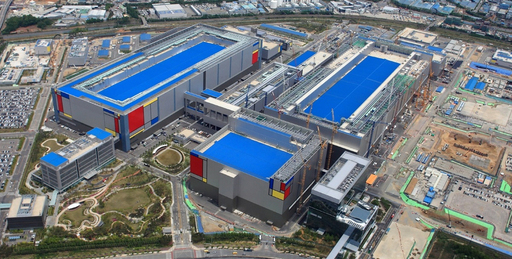
Samsung Electronics has initiated internal personnel reallocations to target the next-generation high-bandwidth memory (HBM) market, but concerns are rising within the organization regarding this decision. According to the semiconductor industry on the 16th, Samsung's semiconductor division (DS) recently announced 'occasional job postings' for personnel in the process, equipment, and manufacturing sectors of its foundry business. The job postings are part of the internal "free agent" system, offering employees opportunities for job transitions. This recruitment focuses on strengthening the competitiveness of the HBM business. The Memory Manufacturing Technology Center aims to enhance competitiveness for securing the next-generation HBM market, while the Semiconductor Research Institute focuses on strengthening leadership in HBM and package technology research and development. The Global Manufacturing & Infrastructure Division has also announced recruitment for HBM and new product measurement, analysis, and equipment technology strengthening. Initially, Samsung planned to select a specific number of people for reassignment, but the method was changed to an open recruitment process in response to requests from some business units that need elite personnel for next-generation product development and mass production. Last year, some foundry personnel were reassigned to the Memory Manufacturing Technology Center, and now the reassignment of personnel to accelerate HBM4 development appears to be expanding. The background of this decision lies in the fierce competition from SK hynix and Micron. Unlike Samsung, which has not yet passed the HBM3E quality verification (qualification test) due to issues such as heat generation, SK hynix and Micron are currently supplying HBM3E (5th generation HBM) products to their largest customer, NVIDIA. To make matters worse, Samsung lost its top spot in the global DRAM market to SK hynix. According to market research firm Counterpoint Research, SK hynix's DRAM market share in Q1 of this year was 36%, while Samsung's was 34%. As a result, Samsung has expressed its determination not to repeat the painful failure in the HBM4 market. Young-hyun Jeon, President of Samsung Electronics' DS Division (Vice Chairman), stated at last month's shareholder meeting, "We will significantly increase HBM supply compared to last year to strengthen our position in the market," and "We will develop and mass-produce HBM4 without any issues by the second half of this year." Industry experts view Samsung's move as an unavoidable response. A semiconductor expert explained, "HBM4 is a key component that determines the performance of AI semiconductors, and competitiveness in this market is directly tied to leadership in the entire memory semiconductor industry. Focusing the company's capabilities on HBM4 to make up for the lag in HBM3E is an unavoidable choice." However, the internal atmosphere remains chaotic. Management believes that the surplus personnel from the foundry, due to reduced utilization rates, can be strategically redeployed, but within the foundry business, there are concerns that the depletion of key talent could reduce technical focus, making competition with TSMC even fiercer. There are also reports that morale significantly dropped among employees who remained in the foundry division when some personnel were transferred to the memory division last year. One internal source said, "It’s true that the internal atmosphere is uneasy as foundry personnel are repeatedly transferred to the memory division. The growing sense of relative deprivation due to wage gaps between business units could lead to conflicts between them if this continues." ChatGPT를 사용하여 번역한 기사입니다.

2025-04-16 16:15:09 메트로신문 기자
기사사진
Steel industry forecasts "cloudy" Q1… aiming for a demand rebound in Q2.

Amid sluggish domestic demand and the aggressive push of low-cost Chinese steel products, Korea's major steelmakers are facing tough conditions, and the industry’s Q1 performance is expected to sharply decline. However, with seasonal demand recovery and government anti-dumping measures, there are signs that efforts are being made to turn the tide in Q2. According to industry sources on the 14th, more than 200 construction companies in China purchased a total of 5.14 million tons of construction steel in March, marking a 23.6% increase from the previous month. The estimated purchase volume for April is projected to reach 5.91 million tons. With the seasonal peak period arriving in most regions of China, construction steel demand is rising, leading to optimistic projections that the oversupply in the local steel market may ease somewhat. Chinese steel companies, which produce around 1 billion tons annually, have been shifting export volumes abroad due to domestic stagnation, leading to a surge of competitively priced Chinese steel products into the Korean market, directly impacting domestic steelmakers. The steel industry is facing a tough business environment ahead of Q1 earnings announcements. Securities firms predict poor results for major steelmakers. Financial data firm F&Guide estimates that the combined operating profit of the three major steel companies for Q1 will decrease by 16% year-on-year, totaling approximately 580 billion won. Hyundai Steel's performance is expected to stand out with a significant decline. Hyundai Steel’s Q1 revenue is expected to be 5.5615 trillion won, with an operating profit of 25 billion won, marking a 96% decline from the same period last year. Industry sources suggest that Hyundai Steel's operating profit could potentially fall into the red due to additional costs from a strike at its Dangjin plant and inventory valuation losses, which could total around 90 billion won. Dongkuk Steel is also expected to report disappointing results. Dongkuk Steel’s Q1 operating profit is expected to be 12.6 billion won, marking an 86% decrease from the same period last year. The primary factors behind the decline include reduced sales of rebar and long steel products due to the prolonged slump in the construction sector. POSCO, among the major steelmakers, is expected to perform relatively well. POSCO Holdings' Q1 operating profit is expected to be 565 billion won, a 3.1% decrease from the same period last year. Compared to other steelmakers, this decline is relatively mild, and considering the previous quarter’s operating profit of 95.4 billion won, there is widespread optimism about a significant improvement in POSCO’s performance. The industry remains hopeful for a recovery in Q2. Hyundai Steel, in particular, is seen as well-positioned for a recovery as it has recently resolved labor disputes, which could help normalize production and meet the expected demand surge in the peak season. Additionally, the Korean government’s decision to impose anti-dumping duties of up to 38% on Chinese hot-rolled steel is expected to create favorable conditions for price increases, which is a positive factor. Domestic steelmakers are also taking measures, such as fully shutting down production of long steel products, to maintain supply-demand balance. An industry insider commented, "Given the increasing market uncertainty due to the U.S.'s aggressive tariff imposition, concerns remain that the rise in steel demand in China could be limited. However, there is cautious optimism that both prices and demand have reached their bottom, and we may see gradual recovery moving forward." ChatGPT를 사용하여 번역한 기사입니다.

2025-04-14 17:18:31 메트로신문 기자
기사사진
U.S. excludes tariffs on semiconductors, smartphones, and laptops… Samsung and Apple breathe a sigh of relief.

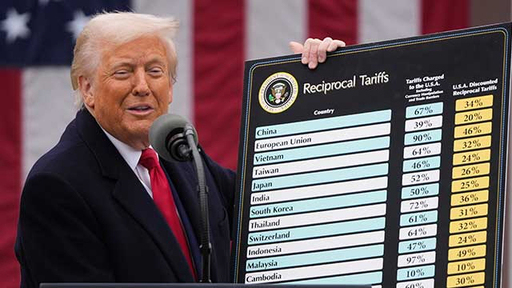
The U.S. administration under Donald Trump has temporarily exempted high tariffs on key electronic products, such as smartphones, laptops, and semiconductor equipment, providing a brief relief to global electronics companies, including Samsung Electronics and Apple. This decision is interpreted as an effort to consider the impact on domestic big tech companies, as well as to reduce the burden on consumers and related industries. According to reports from Bloomberg and other media outlets on the 13th, the U.S. Customs and Border Protection (CBP) announced on the 11th (local time) through a notice on "Reciprocal Tariff Exemptions for Specific Goods" that approximately 20 items, including smartphones, laptops, hard disk drives, computer processors, memory chips, and semiconductor manufacturing equipment, will be exempt from reciprocal tariffs. This measure will be applied retroactively from 12:01 AM on the 5th of the month, and companies can receive refunds for tariffs already paid. This move is expected to have a positive impact on the entire U.S. electronics industry. In particular, Samsung Electronics and Apple are considered major beneficiaries in the smartphone market. Apple sources 90% of its iPhone production from China, while Samsung Electronics produces about half of its smartphones in its Vietnam plant. Earlier, the Trump administration had announced tariffs of up to 145% on Chinese products and 46% on Vietnamese products, meaning this new decision will relieve both companies from significant tariff burdens. The semiconductor industry has also been somewhat relieved by this decision. The Trump administration included not only finished products like memory chips, DRAM modules, and solid-state drives (SSDs) but also semiconductor manufacturing equipment in the list of tariff-exempt items. This is a positive development for Samsung Electronics and SK hynix, which do not have memory production facilities in the U.S. In particular, semiconductor manufacturing equipment is crucial for future investments in U.S.-based semiconductor plants, and this move is seen as a response to the U.S. policy of attracting semiconductor plants to the country. However, there is also a perspective that this announcement is only a temporary easing measure. President Trump has continuously stated his position that he can impose item-specific tariffs on critical technology products such as semiconductors under Section 232 of the Trade Expansion Act. Section 232 of the Trade Expansion Act allows the U.S. president to impose tariffs or other measures to restrict imports of specific items deemed to threaten national security. The U.S. has already applied Section 232 to impose a 25% tariff on steel and automobiles. Meanwhile, the Trump administration is expected to clarify its stance on semiconductor tariffs on the 14th (local time). Initially, a 25% tariff had been proposed, but given the burden on domestic big tech companies, there are discussions about the possibility of adjusting the tariff rate. ChatGPT를 사용하여 번역한 기사입니다.

2025-04-13 16:08:19 메트로신문 기자
기사사진
전화 기다리는 트럼프, 생각 없는 시진핑…'치킨 게임' 누가 웃을까

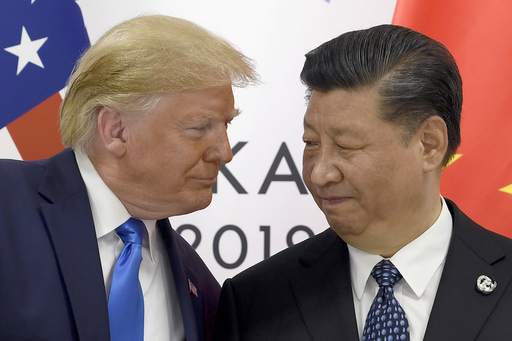
도널드 트럼프 미국 대통령과 시진핑 중국 국가주석의 관세 전쟁이 '강 대 강' 치킨 게임으로 치달으면서 출구를 못 찾고 있다. 트럼프 대통령은 대중국 관세를 인상하면서도 시 주석 통화를 촉구했는데, 중국은 전면 거부하고 있어 갈등 장기화가 우려된다. 10일(현지 시간) CNN에 따르면 복수의 백악관 고위 관계자는 이번 중국과 관세 갈등에서 미국이 먼저 손 내미는 일은 없을 것이라고 선 그었다. 트럼프 대통령은 중국이 보복 조치에 나선 탓에 무역 전쟁이 심화했다고 믿고 있으며, 이를 전제로 중국이 먼저 움직여야 한다고 참모들에게 지시했다고 한다. 트럼프 대통령은 전날 중국을 제외한 교역국에 상호 관세를 90일 유예하면서 중국의 보복 조처를 거칠게 비판했다. 대중국 관세를 125%로 인상한 근거로 "중국이 세계 시장에 보여준 존경심 부족"을 들며 비난했다고 뉴시스가 인용했다. 동시에 시 주석의 전화를 촉구하고 있다. 트럼프 대통령은 이날 각료회의를 주재하면서 "우리(미중)가 매우 잘 지냈을 수 있을 거라고 확신하고, 난 시 주석에 큰 존경심을 갖고 있다"며 협상을 기대한다고 밝혔다.전날 백악관 행사에선 "중국은 협상을 원한다. 단지 어떻게 해야 하는지 잘 모를 뿐이다"라며, 중국 역시 협상 의지가 있다고 기대했다.트럼프 대통령의 수사에도 중국은 현재로선 물러서지 않을 것으로 보인다. 소식통들은 미국 관료들이 중국 측에 '시 주석이 먼저 통화를 요청해야 한다'는 입장을 계속 전달했지만, 중국이 거듭 거절했다고 CNN에 전했다.중국 상무부 대변인도 전날 "대화는 열려 있지만, 상호 존중과 평등을 기반으로 이뤄져야 한다"며 "압박과 위협, 협박은 중국과 교섭하는 올바른 방식이 아니다"라고 선 그었다.미국과 중국 간 소통 채널이 부족한 점도 대치 상황을 장기화하고 있다.트럼프 대통령 취임 후 두 달이 넘도록 미중 고위급 대화는 가동되지 않았다. 비공식 채널로 소통을 타진했지만, 결과적으로 상황만 악화됐다. 중국은 전임 바이든 행정부 당시 제이크 설리번 국가안보보좌관과 했던 것처럼 트럼프 행정부와 비공식 채널을 구축하려고 시도 중이다.그중 한 명이 트럼프 대통령의 '1호 친구'인 일론 머스크였다. 머스크는 중국과 깊은 사업적 이해관계를 맺고 있다. 다만 현재까지 별다른 성과는 없다고 한다.트럼프 행정부가 바라는 대화 채널도 받아들여지지 않았다.소식통에 따르면 트럼프 행정부는 왕이 외교부장이 시 주석의 최측근이 아니라고 판단, 대화 상대로 보고 있지 않다고 한다. 미국 행정부가 요청한 대화 채널은 중국이 거부했다고 한다. 체면과 엄격한 의전 절차를 중시하는 중국과 트럼프식 협상 방식이 근본적으로 상충된다는 지적도 있다.일각에선 트럼프 대통령과 시 주석 모두 물러서지 않는 상황에 현재로선 시 주석이 우위를 점하고 있다는 분석이 나온다. 대니 러셀 전 국무부 동아시아 담당 차관은 CNN에 "트럼프 행정부 공격으로 시 주석은 훨씬 더 강력한 정치적 지위를 확보했다"며 "관세로 인한 경제적 고통을 감수하도록 국민들을 설득할 더 좋은 위치에 있다"고 설명했다.

2025-04-11 15:11:21 최규춘 기자
기사사진
비트코인, 미중 무역갈등 격화 4% 급락…1억2000만원대 반납

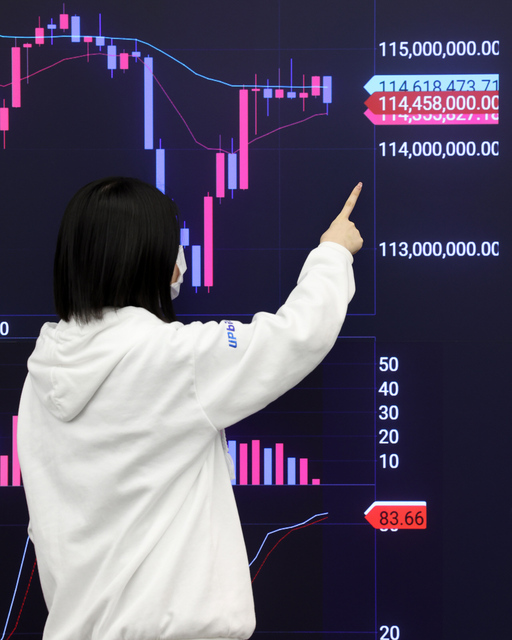
비트코인이 상호관세 유예 효과로 급등한 지 하루 만에 1억2000만원대를 반납했다. 미국 3월 소비자물가지수(CPI)가 예상치를 밑돌았음에도 미중 무역갈등 여파로 조정을 받는 모습이다. 11일 오전 8시50분 기준 비트코인은 국내 가상자산 거래소 빗썸에서 24시간 전보다 1.95% 하락한 1억1793만원을 기록했다.같은 시각 업비트에서는 2.75% 떨어진 1억1799만원에 거래됐다. 가상자산 시황 중계 사이트 코인마켓캡에서는 24시간 전보다 4.01% 빠진 7만9612달러를 나타냈다.시가총액(시총) 2위 이더리움도 전날 상승분을 전부 반납했다. 같은 시각 이더리움은 빗썸에서 2.59% 하락한 225만원을, 업비트에서는 7.82% 떨어진 226만원을 기록했다. 코인마켓캡에서는 8.84% 빠진 1521달러에 거래됐다. 리플과 솔라나 등 주요 알트코인들도 하락 전환했다. 같은 시각 코인마켓캡에서 리플은 4.23%, 솔라나는 5.32%, 도지코인은 4.22%, 에이다는 3.56% 각각 빠졌다.비트코인의 국내외 가격 차이를 뜻하는 김치프리미엄은 1%대를 이어갔다. 글로벌 가상자산 시황 비교 플랫폼 크라이프라이스에 따르면 이날 오전 9시3분 기준 비트코인 김치프리미엄은 1.90%다.시장은 하루 만에 살아난 관세 불안감에 다시 휘청였다. 트럼프 행정부가 중국에 부과하는 합계 관세율이 총 145%인 점이 알려지면서다. 미중 무역 갈등이 재차 격화하자 위험자산 회피심리가 커진 것이다. 예상치를 밑돈 3월 CPI도 소용 없었다. 가상자산 대표 호재인 금리인하 기대감보다 관세 여파가 더 컸던 셈이다. 10일(현지시간) 발표된 3월 CPI 상승률은 2.4%로 전문가 예상을 밑돌았다.이 가운데 트럼프발(發) 리스크가 가상자산 가치를 더 키울 것이란 분석이 나왔다.홍성욱 NH투자증권 연구원은 이날 보고서를 통해 "비트코인은 신용화폐에 대한 헤지 수단으로 탄생했다. 1등 신용화폐인 달러의 신뢰도 훼손은 비트코인 가치 상승으로 이어진다"며 "달러 붕괴라는 비트코인의 꿈을 트럼프 대통령이 돕고 있다"고 진단했다고 뉴시스가 전했다. 그러면서 달러의 영향력을 약화시키는 트럼프발 리스크를 ▲부채한도 협상 불발 ▲미국채 채무재조정 ▲연방준비제도(Fed) 독립성 훼손 ▲트럼프 3선 ▲대미 무역 및 무역적자 축소 등으로 꼽았다.투심도 하루 만에 급격히 악화됐다. 글로벌 가상자산 데이터 조사 업체 얼터너티브(Alternative)에서 집계하는 '공포·탐욕 지수'는 이날 25점을 기록하며 '극단적 공포(Extreme Fear)' 수준을 나타냈다. 전날(39·공포)보다 떨어진 수치다. 해당 지수는 0에 가까울수록 극단적 공포를, 100에 가까울수록 극단적 낙관을 각각 의미한다.

2025-04-11 10:27:51 최규춘 기자
기사사진
High exchange rates and falling oil prices... Diverging strategies in the refining industry.

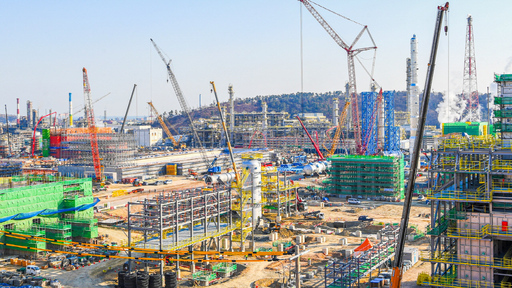
Amid the global tariff war sparked by U.S. President Donald Trump's policies, international oil prices have plummeted and the value of the won has fallen, causing divergent responses among domestic refining companies. Some are viewing the oil price decline as an opportunity to increase investments, while others are focusing on securing financial stability, with differing strategies in play. As of the 9th, Brent crude was trading at $61.88 per barrel. After China announced it would impose a 84% retaliatory tariff on U.S. products starting on the 10th, Brent crude dropped to $58.40 per barrel during the session. This marked the first time the $60 mark was breached since the COVID-19 pandemic and U.S.-China tensions in 2020. U.S. West Texas Intermediate (WTI) also showed weakness, closing at $62.35 per barrel on the same day, and dipping below $60 to $59.58 on the previous day. The uncertainty in the refining industry has further increased due to the high exchange rate. As of 3:30 p.m., the exchange rate stood at 1,456.4 won to the dollar. While the date for the implementation of the reciprocal tariffs has been delayed by three months, the market remains tense, with concerns that the rate could surpass 1,500 won. The Korea International Trade Association has forecasted that if the exchange rate rises by 10%, the cost of goods in the 'coal/oil and natural gas' sectors will increase by an average of 3.39%. Typically, refining companies reflect exchange rate fluctuations in product prices, but with both high exchange rates and growing concerns about an economic slowdown, the risk of reduced demand and falling refining margins cannot be ignored, making the impact negative for the industry. As industry uncertainties increase, refining companies are adopting different strategies in response. S-Oil and SK Innovation are making large-scale investments in preparation for a recovery in demand. In particular, S-Oil is undertaking the Shahin Project, which is the largest investment in the history of the domestic petrochemical industry, amounting to 9.258 trillion won. Once the Shahin Project becomes fully operational, S-Oil will produce basic petrochemical products such as 1.8 million tons of ethylene, 770,000 tons of propylene, 200,000 tons of butadiene, and 280,000 tons of benzene. SK Innovation is considering building self-generation facilities at its Ulsan complex and is exploring the option of directly producing LNG. This aims to reduce electricity costs and create synergies with SK Innovation E&S, which was merged last year. On the other hand, HD Hyundai Oilbank is focusing more on securing financial stability rather than making bold investments. According to Korea Credit Rating, HD Hyundai Oilbank’s net debt at the end of last year was 8.6 trillion won, a slight decrease from 8.8 trillion won the previous year. The total liabilities disclosed also decreased from 9.1653 trillion won to 9.1328 trillion won, indicating that efforts to improve its financial structure have had some effect. HD Hyundai Oilbank made a large investment in heavy oil cracking facilities (HPC), injecting 4.7 trillion won from 2020 to the end of 2022, which significantly increased its borrowing. This year, the company plans to focus on stabilizing its financial structure after the large-scale investment. An industry insider commented, "As oil prices continue to fluctuate rapidly, refining demand and supply will inevitably undergo periodic adjustments. Currently, the decline in international oil prices is having a negative impact on refiners in terms of inventory valuation losses, but it is cautiously speculated that with the recovery in demand, both oil prices and refining margins may rebound." ChatGPT를 사용하여 번역한 기사입니다.

2025-04-10 17:00:37 메트로신문 기자
기사사진
"The 'Dream Substrate' Glass War Has Begun… Samsung, SK, and LG Enter a Three-Way Battle"

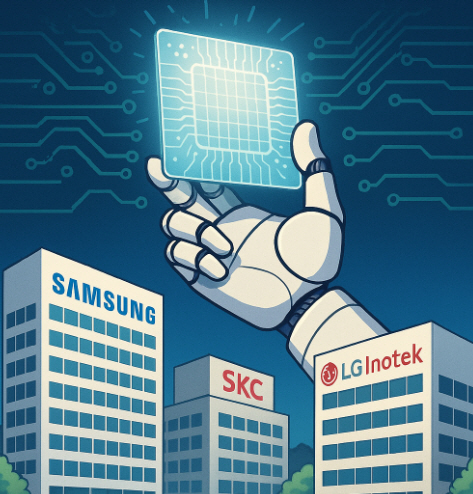
As the demand for artificial intelligence (AI) semiconductors surges, glass substrates, which have emerged as a key material for next-generation semiconductors, are now being increasingly adopted. Following Samsung and SK, LG has also joined the competition for technological leadership in this area, sparking a race among the three major domestic companies. According to industry sources on the 9th, glass substrates replace the organic substrates, typically made of plastic, on which semiconductor chips are mounted. Glass is heat-resistant and has a smooth surface, making it less prone to deformation even at high temperatures, which is advantageous for implementing fine circuits. In fact, using glass substrates can increase data processing speed while reducing power consumption, earning it the title of the "dream substrate." The global semiconductor industry is also showing intense interest. Global semiconductor companies like Intel, Nvidia, and AMD are revealing plans to adopt glass substrates in their next-generation products. In fact, Intel has announced plans to release commercial products with glass substrates by 2030. Market research firm Insight Partners stated, "The glass substrate market is expected to grow from approximately $23 million (about 31.6 billion won) this year to $4.2 billion (about 5.7 trillion won) by 2034," adding, "The market's potential has already been confirmed, and profitability is guaranteed." In South Korea, Samsung Electro-Mechanics is taking the fastest steps. The company has established a pilot production line for glass substrates at its Sejong plant and plans to begin prototype production as early as the second quarter. Jang Deok-hyun, President of Samsung Electro-Mechanics, stated at CES 2025 in January, "We plan to promote semiconductor glass substrate samples (prototypes) this year." Samsung Electro-Mechanics is also preparing for mass production in partnership with glass substrate manufacturing companies such as Corning, YMT, and Inometry. SK, through its subsidiary SKC, completed a glass substrate production plant in Georgia, USA, last year. SKC's subsidiary, Apsolix, is a joint venture with global semiconductor equipment company Applied Materials (AMAT). They are currently producing prototypes and conducting customer evaluations, aiming to accelerate technology development with a target for commercialization in 2026. Latecomer LG Innotek has also recently declared its full-scale entry into the market. The company has started ordering key process equipment to establish a glass substrate pilot production line at its Gumi plant in North Gyeongsang Province. Last month, LG Innotek signed a 6 trillion won investment agreement with the city of Gumi to strengthen its glass substrate development and production base. Through this, the Gumi plant is planned to become the next-generation production hub for FC-BGA substrates and glass substrates. Industry experts analyze that the leader in the "early glass substrate market" will determine the future dominance of the semiconductor packaging industry. Lee Chang-min, a researcher at KB Securities, stated, "With the expansion of AI, data processing volumes will increase exponentially, and by 2030, it will be difficult for existing substrates to keep up," forecasting an increase in demand for glass substrates. ChatGPT를 사용하여 번역한 기사입니다.
2025-04-09 16:56:29 메트로신문 기자