메트로人 머니 산업 IT·과학 정치&정책 생활경제 사회 에듀&JOB 기획연재 오피니언 라이프 CEO와칭 플러스
글로벌 메트로신문
로그인
회원가입

    머니

  • 증권
  • 은행
  • 보험
  • 카드
  • 부동산
  • 경제일반

    산업

  • 재계
  • 자동차
  • 전기전자
  • 물류항공
  • 산업일반

    IT·과학

  • 인터넷
  • 게임
  • 방송통신
  • IT·과학일반

    사회

  • 지방행정
  • 국제
  • 사회일반

    플러스

  • 한줄뉴스
  • 포토
  • 영상
  • 운세/사주
국제
기사사진
"Envisioning Future Daily Life" – CES 2025 Concludes, with Key Highlights Including 'AI Home' and the Emergence of 'Humanoid Robots'

The world's largest consumer electronics and IT exhibition, 'CES 2025,' concluded successfully with around 140,000 attendees. This year, instead of focusing on hardware, AI home technologies integrated into daily life became the central theme, with humanoid robots emerging as a new focal point, showcasing more realistic artificial intelligence (AI) advancements. According to the Consumer Technology Association (CTA), the organizer of CES, more than 141,000 people attended CES 2025, held in Las Vegas from January 7 to 10. This marks an increase of about 5% compared to last year's attendance of 135,000. The United States had the largest representation with over 1,500 participants, followed by China with around 1,300 and South Korea with 1,000. For the first time, South Korea had more than 1,000 companies, including major corporations like Samsung, Hyundai, SK, LG, as well as startups, participating in the event. ◆ 'Humanoid Robots' Emerging as a New Growth Business At this year's CES, AI has firmly established itself as an essential element in daily life, spanning across home appliances, mobility, healthcare, and more. In particular, AI-powered 'robots' were introduced as a key new business poised to dominate the market. Jensen Huang, CEO of NVIDIA, highlighted AI robots as a growing industry during his keynote speech, with South Korean companies also announcing their participation one after another. At this event, South Korea's two major electronics companies, Samsung Electronics and LG Electronics, officially announced the release of robot assistants under the theme of hyper-personalization, marking the beginning of humanoid robots. Samsung Electronics surprised attendees by announcing plans to launch its AI assistant robot, "Bolli," in the first half of the year. It is expected to be released in South Korea and the United States around May or June, although the price has not yet been set. Bolli will control Internet of Things (IoT) devices, monitor children and pets, and perform tasks such as acting as a home training mate or serving as an auxiliary screen for remote work, essentially taking on the role of a household assistant. Recently, Samsung Electronics acquired a majority stake in Rainbow Robotics and established the Future Robotics Promotion Team under the leadership of Vice Chairman Han Jong-hee. Rainbow Robotics, founded in 2011 by the KAIST HUBO Lab research team, developed South Korea's first bipedal robot, "HUBO." Samsung Electronics plans to accelerate the development of intelligent advanced humanoid robots by integrating its AI and software technologies with Rainbow Robotics' robotic expertise. LG Electronics also unveiled plans for its humanoid business, with the goal of achieving "liberation from household chores." LG Electronics plans to release its mobile AI home hub product, "Q9," and a software development kit (SDK) to developers in February or March. Additionally, the company is preparing technologies, including humanoid robots, as part of its ongoing research and development (R&D) efforts and is also investing in the robotics business. Last March, LG made a $60 million (approximately 80 billion won) investment in the AI-based autonomous service robot startup Bear Robotics, acquiring a stake in the company. ◆ Advanced AI Home Appliances to Future Mobility Unveiled Both companies unveiled increasingly advanced AI-powered home appliances, showcasing a hyper-personalized smart home experience. Samsung Electronics presented a "Home AI" based on SmartThings, with the theme of "AI for All," offering a personalized home for families. The exhibition featured appliances such as the "Bespoke AI Family Hub," which automatically recognizes ingredients inside the refrigerator and creates a food list, and the "Bespoke AI Steam," which takes care of floor cleaning according to the user's return time. The AI voice assistant "Bixby" integrated into Samsung's home appliances has also been upgraded. It now enables natural and continuous conversations, allowing users to control multiple devices with a single command. Bixby can recognize the voices of family members and provide personalized schedules. It can also identify ingredients nearing their expiration date in the refrigerator and suggest recipes based on available food. Samsung Electronics prioritized security in implementing Home AI. Samsung Knox Matrix, a blockchain-based security technology, allows connected devices to mutually check their security status. If external threats are detected, the affected device's connection is severed, and the system notifies the user, enabling immediate action to be taken. LG Electronics showcased a personalized experience through "empathy intelligence" in various environments such as homes, offices, vehicles, and hobby spaces. In LG Electronics' AI Home Zone, the "LG ThinQ ON" equipped with generative AI and on-device AI-based hub products were showcased. These products use sensors installed throughout the home to detect customers' behaviors and surrounding environments in real-time, optimally controlling IoT devices. For instance, the system can analyze the user's heart rate and breathing patterns to suggest warm water instead of cold, or automatically adjust the home's temperature and humidity. Additionally, LG Electronics showcased an impressive large-scale media art installation using the 77-inch wireless and transparent OLED TV, "LG Signature OLED T." This technology combines wireless transmission and transparent display to maximize space utilization, offering an innovative entertainment experience. In the mobility sector, innovative technologies integrating autonomous driving and electric power stood out. LG Electronics introduced the concept of a "mobile customized space" in the mobility sector. In the Vision AI-based In-Cabin Sensing solution experience zone, attendees could directly experience technology that detects the driver's and the vehicle's internal condition, helping to prevent traffic accidents. This solution analyzes the driver's gaze, facial expressions, and heart rate in real-time to support safety features such as drowsiness detection and seatbelt use detection. ChatGPT를 사용하여 번역한 기사입니다.

2025-01-14 16:36:58 메트로신문 기자
기사사진
The wire and cable industry is experiencing a surge in orders due to increased investments in power grids, strengthening its presence in the U.S. and Europe.

The wire and cable industry, which achieved consecutive order wins last year, is expected to continue its strong performance this year. LS Cable & System, Daehan Electric Wire, and others plan to strengthen their presence in advanced markets such as the U.S. and Europe, based on the growing demand driven by electrification. Notably, the increase in demand for subsea cables due to the transition to renewable energy is also highlighted as a key factor contributing to their strong performance. According to industry sources on the 14th, global subsea cable demand is expected to increase from 6.4 trillion won in 2022 to 29.5 trillion won by 2029. This is attributed to the steady rise in global investments in new power infrastructure. According to LS Cable & System's analysis of the U.S. subsea cable supply status, local demand for subsea cables is expected to reach 1,160 km by 2030, while the supply is predicted to fall short at less than 750 km. As a result, the industry is optimistic that it can capitalize on the opportunity in the U.S., where demand is high but the local supply chain is lacking. Moreover, the willingness of President-elect Donald Trump to strengthen domestic manufacturing and the AI industry is also seen as a positive factor for the wire and cable industry. The expansion of AI is expected to lead to increased power consumption in data centers, which, in turn, is anticipated to drive the demand for power grid infrastructure. In October 2024, the U.S. Department of Energy (DOE) announced that it would invest an additional $2 billion (approximately 2.6 trillion won) into 38 projects across 42 states to protect the power grid from increasing weather-related threats and expand transmission capabilities. Additionally, the DOE revealed plans for a new $1.5 billion (approximately 2.23 trillion won) investment in transmission and distribution networks. As a result, the wire and cable industry is steadily building up performance by securing large-scale projects. LS Cable & System's order backlog reached 5.7073 trillion won as of the third quarter, marking an approximately 31% increase compared to the same period last year. In December 2024, the company signed a contract for subsea cables worth 4.4 trillion won in the U.S. and also secured a contract for an offshore wind farm project worth approximately 9.037 trillion won, which was tendered by the Dutch utility company TenneT. Daehan Electric Wire is also increasing its order intake. As of the third quarter, Daehan Electric Wire's order backlog reached 2.3258 trillion won, marking a 43% increase compared to the same period last year. On the 10th, Daehan Electric Wire announced that it would supply a 400 kV (kilovolt) power grid for an aging power grid replacement project in Eastern England, led by global infrastructure group Valpore BT. The contract is worth approximately 1 trillion won. With European countries, including the UK, expanding investments in power infrastructure to meet carbon neutrality goals, Daehan Electric Wire aims to secure continuous business opportunities. Some are expressing concerns that the supply of raw materials may struggle to keep up with demand. However, industry sources have stated that they are taking stable measures to secure raw materials, and therefore, there is no need to worry about a shortage of materials. An industry insider stated, "With the expansion of renewable energy generation, electricity demand is increasing, and the industry is optimistic about the outlook for the fourth quarter." They added, "Raw materials such as copper have already been secured for several months in advance, so even with a surge in demand, there is no expected difficulty in securing raw material supplies." ChatGPT를 사용하여 번역한 기사입니다.

2025-01-14 15:58:20 메트로신문 기자
기사사진
U.S. Department of Commerce's Export Controls on AI Chips for Adversarial Countries… Controversy Over 'Excessive Regulation' and 'China's Technological Self-Sufficiency'

The United States has confirmed and announced plans to expand export restrictions on AI semiconductors, which are essential for the development and operation of artificial intelligence (AI), to the global market. While full access to AI semiconductors will be allowed for allied nations, major adversaries will face restrictions in an effort to hinder their technological development. According to industry sources and foreign media on the 14th, the U.S. Department of Commerce announced on the 13th (local time) that it has strengthened export controls on AI semiconductors and revised the Export Administration Regulations (EAR) to block circumvention of exports. A 120-day public comment period has begun. The regulation is expected to be fully implemented during the second term of the Trump administration. The EAR divides countries worldwide into three categories based on their access to advanced AI semiconductors. South Korea is classified as a Category 1 country, which includes 18 nations that are not subject to these regulations, so it is not expected to be significantly affected. Category 2 countries, which number around 120, can purchase AI semiconductors based on national quotas. Category 3 countries, including Russia, China, and North Korea, totaling 22 countries, must obtain approval from the U.S. Department of Commerce. These countries, which are under weapons embargoes, are subject to a presumption of denial when applying for licenses. The U.S. government's implementation of the EAR measures is analyzed as a reflection of its independent national security perspective. By preventing adversarial nations, such as Russia and China, from accessing advanced AI semiconductor chips and models, the U.S. aims to block them from securing technological competitiveness. South Korea, as a Category 1 country, is largely exempt from most of the regulations and is not expected to be significantly affected. However, even South Korean companies could be subject to regulations if their headquarters are located in a Category 3 country. Although the expected impact on South Korean companies is minimal, they are closely monitoring the situation. Companies like Samsung Electronics and SK Hynix, which operate semiconductor production facilities in China, are not immediately affected because their headquarters are in South Korea. However, since the EAR not only controls the export and import of AI semiconductors but also imposes restrictions on data center construction regardless of the category, and includes advanced AI models in the export controls, there is a possibility that they may still be impacted. Countries like South Korea, which are classified as Category 1, are exempt from these export controls, but Category 2 countries are subject to them. Furthermore, with China being designated as a Category 3 country, there is concern that South Korea's potential market in China could face long-term impacts. Industry experts explain that this could result in a loss of some market demand, while also accelerating China's technological self-sufficiency. An industry insider stated, "In the medium to long term, the country that will seek to secure the most AI semiconductors is inevitably China," adding, "There are concerns that by cornering China, we may actually accelerate its semiconductor development." Experts predict that China is likely to grow quickly enough this year to release HBM3. Global IT companies are also strongly opposing this measure, arguing that it is excessive for a single government to be so heavily involved in export and import controls. NVIDIA immediately responded with opposition, and Ned Finkel, the company's Vice President of Public Affairs, issued a statement. NVIDIA pointed out that "this measure risks wasting the technological advantages the U.S. has gained with difficulty by manipulating market outcomes and suppressing competition." They also criticized, saying, "The U.S. wins by fostering innovation and competition, and by sharing technology with the world, not by retreating behind the wall of excessive government intervention." Ken Glynn, Vice President of Oracle, criticized the move on his blog, stating that it would be "the most destructive regulation ever recorded for the U.S. tech industry." ChatGPT를 사용하여 번역한 기사입니다.

2025-01-14 15:47:13 메트로신문 기자
기사사진
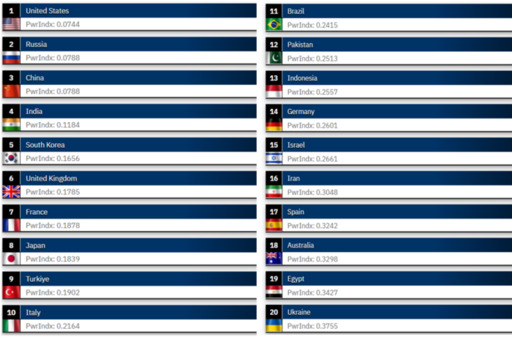
핵무기 뺀 재래식 군사력, 한국 5위·북한 34위…1위는 미국

핵무기를 제외한 재래식 군사력 평가에서 우리나라는 5위, 북한은 34위를 차지했다. 1위는 미국이었고, 2위는 러시아, 이어 중국, 인도 순이었다. 14일 군사력 평가기관 글로벌파이어파워(GFP)가 공개한 '2025 군사력 랭킹'(2025 Military Strength Ranking)에 따르면 한국은 GFP 평가에서 작년과 같은 5위를 기록했다. GFP는 한국에 대해 "아시아태평양지역에서 일상적으로 안정적인 이 나라에서 발생한 최근 정치적 급변 사태에 주목한다"는 부가 설명을 달았다. 북한은 34위로 평가됐다. 지난해 36위보다 두 계단 올랐다. GFP는 북한 지상군의 탱크, 자주포, 다연장로켓발사체계를 높이 평가했다. 공군의 전투기 수와 공격기 수, 해군의 순시선·잠수함·프리깃함·코벳함 수에도 긍정적 평가를 했다. 북한은 또, 동원 가능한 육·공군 병력이 각각 137만명과 6만명으로 6위에 올랐다. 동원 가능한 해군 병력은 열두 번째로 많은 6만명으로 추산됐다. GFP는 "북한군의 러시아 파병이 우크라이나와 러시아의 전황에 흥미로운 전개를 초래했다"고 언급했다. GFP 랭킹은 재래식 무기를 바탕으로 한 국가의 전쟁 수행능력을 지수로 산출해 순위를 매긴 것으로, 핵능력은 반영되지 않는다.

2025-01-14 13:42:17 원승일 기자
기사사진
LA 산불로 최소 24명 사망…강풍 예보에 사상자 더 늘수도

미국 로스앤젤레스(LA)에서 발생한 대형 산불로 최소 24명이 사망한 가운데 강풍이 예보돼 진화 작업에 난항이 예상된다. 진화 작업이 늦어지면 사상자 수가 더 늘어날 것이란 관측도 나왔다. LA 당국이 13일(현지시각) 오후부터 강해지는 바람이 14일과 15일 오후까지 계속될 것이라고 경고했다. 지난주 앨터디너와 패서디너를 덮친 이턴 산불과 팰리세이즈를 덮친 산불 때도 강풍 경보가 발령됐었다. 이턴 산불과 팰리세이즈 산불은 캘리포니아 주 사상 최악의 피해를 주고 있다. LA카운티 검시관실에 따르면 전날 오후 5시 기준 사망자가 24명으로 늘었다. 이들 중 8명이 팰리세이즈, 16명이 이턴 산불로 사망한 것으로 파악됐다. 또 이튼 산불 화재 지역에서는 12명이 실종됐고, 팰리세이즈 화재 지역에서는 4명이 실종됐다. 강풍 경보가 발령되면서 팰리세이즈 주변 등 위험 지역에 소방대원과 장비들이 배치됐다. 이번 강풍은 지난주보다 강하지 않을 것으로 예상되나 더 길어지면서 피해가 커질 수 있다는 우려가 나온다. 당국자들은 사상자가 늘어날 것으로 경고했다. 주말 동안 불탄 지역이 4만 에이커(약 162 평방㎞)에 달한다. 이는 샌프란시스코 면적보다 넓은 면적이다. 현재 대피 명령을 받은 주민은 10만명보다 줄어든 9만2000명 수준이다. 화재로 불판 주택과 차량 등 구조물이 1만2000개 이상 추정된다. 화재 원인이 아직 규명되지 않은 상황에서 일각에서는 이턴과 팰리세이즈 인근 전력선이 원인이라는 지적이 나왔다. 방화 가능성도 배제되지 않고 있다.

2025-01-14 09:57:07 원승일 기자
기사사진
Big Tech Companies Abandon DEI Policies Ahead of Trump's Inauguration... Beginning of Efforts to Align with the 'Trump Code'

Ahead of the inauguration of U.S. President-elect Donald Trump, global big tech companies have started "waiting and watching" in response to the political changes. They are focusing on improving their relationship with the Trump administration by either abolishing or scaling back diversity, equity, and inclusion (DEI) policies. ◆ Movement to Abolish DEI Policies... Adapting to Political Changes According to Reuters on the 12th (local time), Meta, the world's largest social media platform, recently announced in an internal memo that it would end its DEI policies, which had been implemented in areas such as employment, training, and vendor selection. Jernel Gale, Meta's Vice President of Human Resources, stated in the memo, "The legal and policy environment surrounding DEI is changing in the United States," and explained, "While we will continue to seek employees from diverse backgrounds, we will abolish the previous approach of selecting candidates based on diversity criteria." The largest e-commerce platform in the U.S., Amazon, also announced in an employee memo last month that it plans to scale back its diversity-related programs by the end of 2024. DEI (Diversity, Equity, and Inclusion) policies were introduced by U.S. companies following the 2020 George Floyd incident, which spurred the anti-racism movement. These policies are aimed at hiring talent regardless of race, gender, or religion, with the goal of fostering a more inclusive and equitable workforce. However, after the U.S. Supreme Court's ruling in 2023 that abolished affirmative action in college admissions, conservatives have increased pressure, arguing that DEI policies lead to "reverse discrimination." President-elect Trump has also clearly expressed his opposition to DEI policies. In contrast, Apple has maintained its stance to uphold DEI policies. Ahead of its annual shareholder meeting, the company rejected proposals from some shareholders to end DEI programs, emphasizing the importance of diversity. ◆ Attending Inaugurations and Making Donations... Aligning with the 'Trump Code' In addition to abolishing DEI policies, big tech companies are also taking various steps to align with the policy direction of President-elect Trump. In particular, Meta abolished its "third-party fact-checking" program on January 7 (local time), which was used to identify fake news and verify facts. This move is seen as a response to the requests from President-elect Trump's camp, which opposes social media content censorship. Meta also strengthened its ties with President-elect Trump by hiring Dana White, the CEO of UFC and a close ally of Trump, as a director, and promoting Republican figure Joel Kaplan to the position of global policy head. Additionally, major big tech leaders, including Meta CEO Mark Zuckerberg, OpenAI CEO Sam Altman, and Uber CEO Dara Khosrowshahi, are set to attend President-elect Trump's inauguration on January 20. These individuals have each donated $1 million to Trump's inauguration committee. Earlier this month, Amazon joined the effort to align with political codes by announcing the production of a documentary film centered around Melania Trump, the wife of President-elect Trump. Industry insiders analyze these actions as a proactive response to the potential for big tech regulation under the Trump administration. It is interpreted as an active effort to align with the political direction ahead of Donald Trump's inauguration as President. ChatGPT를 사용하여 번역한 기사입니다.

2025-01-13 16:36:01 메트로신문 기자
기사사진
Battery Material Industry Faces Growing Uncertainty, Actively Working on Countermeasures

The prevailing opinion is that the price of lithium, a key raw material for electric vehicle batteries, is unlikely to rise significantly this year. With the decline in raw material prices, there are increasing expectations that the outlook for battery material companies will also remain bleak. In response, battery material companies are focusing on strengthening their superior technology and stable supply capabilities to overcome the decline in profitability caused by falling mineral prices. According to Korea Resources Information Service (KOMIS) on the 13th, the price of lithium was 72 yuan per kilogram as of the 9th. Lithium prices began to decline in the fourth quarter of 2022 due to a slowdown in global electric vehicle demand. The price had risen to 581.5 yuan per kilogram in November 2022, but it has been falling due to supply oversupply from China and the electric vehicle demand stagnation period, known as the "electric vehicle chasm." There is growing concern that the inauguration of Donald Trump's second administration could put pressure on lithium prices. Since President-elect Trump is not particularly favorable toward electric vehicles, there are speculations that the recovery of the electric vehicle industry during his term may not be clear, which could impact the demand for lithium. As a result, securities analysts are predicting that domestic battery material companies such as EcoPro BM, L&F, and POSCO Future M will report poor results in the fourth quarter. The main cause is identified as the "lagging effect" due to falling raw material prices. The lagging effect refers to the situation where products made with expensive raw materials are sold at relatively lower prices. According to earnings estimates from financial information provider F&Guide, EcoPro BM is expected to record annual sales of 2.8692 trillion KRW and an operating loss of 38.9 billion KRW for the previous year. After posting a total of 10.6 billion KRW in profits in the first and second quarters of last year, EcoPro BM incurred an operating loss of 41.2 billion KRW in the third quarter. It is expected that the company will see a smaller loss in the fourth quarter, and an annual loss is anticipated to continue. L&F recorded a cumulative operating loss of 360.4 billion KRW for the first to third quarters, surpassing its expected annual operating loss of 220.1 billion KRW for 2023. The company is forecasted to incur an operating loss of 94.2 billion KRW in the fourth quarter. There is widespread consensus that POSCO Future M will also face losses. The company is expected to record an operating loss of 4 billion KRW in the fourth quarter. Battery material companies are actively seeking cost reduction measures, as price reductions in electric vehicles are considered a crucial factor for boosting sales volume. The strategy to secure operating profit margins ultimately points to the need for cost reduction through the diversification of raw material supply chains. Additionally, the industry plans to focus on reducing equipment investment and securing financial strength. This is seen as an effort to maintain stable management in an uncertain market environment. EcoPro aims to stabilize mineral prices by establishing an integrated production joint venture in Indonesia, a resource-rich country, in collaboration with China's GEM. The venture will cover the processes of refining, precursor production, and cathode materials. EcoPro BM is reportedly reducing its equipment investment scale from 15 trillion KRW to around 10 trillion KRW and postponing the completion schedule for its cathode material factory. POSCO Future M plans to focus on improving its financial structure by halting investments in joint ventures and selling some of its assets. Additionally, the industry sees resolving the uncertainty surrounding North American market policies as a key factor for long-term growth. The degree of recovery in EV demand and the potential for gradual recovery in raw material prices are considered prerequisites for long-term growth. An industry insider stated, "Battery material companies are undergoing restructuring through the withdrawal from lithium businesses and reduction of staff, but lithium prices are still on a downward trend." They added, "It is expected that battery material companies will generally record losses in the fourth quarter as well." He continued, "Nonetheless, there will be certain points within the electric vehicle battery value chain where downward rigidity exists." He added, "The potential of the electric vehicle market remains large, and once the current chasm is overcome, the market will grow and enter a maturation phase." ChatGPT를 사용하여 번역한 기사입니다.
2025-01-13 16:18:03 메트로신문 기자
기사사진
LA 산불로 24명 사망, 불길 거세…"사망자 더 늘어날 듯"

미국 캘리포니아주 로스앤젤레스(LA) 근교를 태우고 있는 대형 산불로 지금까지 사망자는 24명, 실종자는 16명으로 집계됐다. 이번주부터 강풍으로 불길을 잡는 데 난항이 예상돼 사망자는 더 늘어날 것으로 보인다. LA카운티 검시관실은 12일(현지시간) 오후 5시 기준 사망자가 24명으로 늘었다고 밝혔다. 이들 중 8명이 팰리세이즈, 16명이 이턴 산불로 사망한 것으로 파악됐다. 문제는 강풍이 이번 주 들어 다시 강해질 것으로 예고돼 불길이 더 거세질 수 있다는 점이다. CNN은 "잠시 잦아들었던 바람이 이번 주 다시 강해질 것으로 예상된다"며 "건조한 초목 상황과 함께 바람이 신규 또는 현재 진행 중인 화재의 확산과 변동성을 키울 것"이라고 보도했다. 당국은 일단 신속한 진화를 위해 수감자까지 동원한 것으로 알려졌다. CNN에 따르면 총 931명의 수감자가 산불 확산을 막기 위해 방화선 구축을 위한 벌목 및 가연성 물질 제거 등 작업에 투입됐다. 산불 진화 작업에 투입된 수감자의 경우 하루당 이틀의 복무일 감면 혜택을 받는다고 한다. 캘리포니아 교정 당국은 "비상 상황에서 생명과 자산을 지키려는 헌신적인 노력"이라고 설명했다. 당국에 따르면 LA 일대에서는 현재 10만5000명 상당의 주민에게 대피령이 내려졌다. 당국은 오는 16일께 대피 주민의 귀가 조치를 논의할 것으로 보인다.

2025-01-13 13:46:14 원승일 기자