메트로人 머니 산업 IT·과학 정치&정책 생활경제 사회 에듀&JOB 기획연재 오피니언 라이프 CEO와칭 플러스
글로벌 메트로신문
로그인
회원가입

    머니

  • 증권
  • 은행
  • 보험
  • 카드
  • 부동산
  • 경제일반

    산업

  • 재계
  • 자동차
  • 전기전자
  • 물류항공
  • 산업일반

    IT·과학

  • 인터넷
  • 게임
  • 방송통신
  • IT·과학일반

    사회

  • 지방행정
  • 국제
  • 사회일반

    플러스

  • 한줄뉴스
  • 포토
  • 영상
  • 운세/사주
국제
기사사진
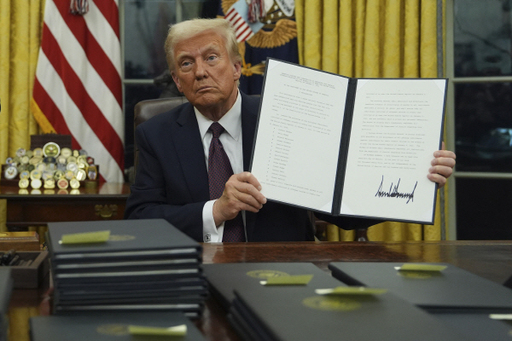
트럼프, '파리 기후변화협정' 또 탈퇴 서명…"불공정·일방적"

20일(현지시간) 취임한 도널드 트럼프 미국 대통령이 파리 기후변화협정을 탈퇴한다는 행정명령에 서명했다.지난 1기 행정부 때 탈퇴한 데 이어 두 번째다. 트럼프 대통령은 이날 워싱턴DC의 연방의회 의사당 실내 취임식 후 지지자들이 모여있는 실내 경기장 '캐피털원 아레나'를 찾아 연설한 뒤 지지자들의 박수를 받으면서 행정명령에 서명했다. 트럼프 대통령은 "나는 즉각 불공정하고 일방적인 파리 기후변화 협정 갈취(ripoff)에서 탈퇴할 것"이라고 말했다. 이어 "중국이 여전히 오염물질을 배출하며 그 물질이 미국으로 날아온다"면서 "모두가 다 같이 하지 않는다면 그것은 의미가 없다. 우리는 더 이상 우리 산업을 사보타주하지 않을 것"이라고 강조했다. 앞서 트럼프 대통령은 지난 2017년 집권 1기 때도 파리 기후변화협정에서 탈퇴했다. 지난 2021년 바이든 전 대통령이 집권 후 이 협정에 재가입하자 이번에 다시 탈퇴했다. 파리 기후변화협정은 지난 2015년 12월 프랑스 파리에서 열린 제 21차 유엔기후 변화협약 당사국총회에서 채택된 국제 협약이다. 전 세계 190개 이상의 국가들이 지구 평균 기온 상승을 산업화 이전 대비 2도 이하로 유지하고, 가능하면 1.5도 이하로 제한하는 것을 목표로 한다. 온실가스 감축을 위해 각국이 자발적으로 감축 목표인 온실가스 감축 목표를 설정하고 이행해야 한다.

2025-01-21 10:23:13 원승일 기자
기사사진
Korea Zinc Management Dispute to be Decided This Week…Choi Yoon-beom vs. MBK Alliance: Who Will Prevail?

In the ongoing management dispute at Korea Zinc, Chairman Choi Yoon-beom's side and the alliance of Youngpoong and MBK Partners (MBK) will engage in a vote battle at the extraordinary general meeting of shareholders on the 23rd. The key issue of this meeting is the introduction of cumulative voting. The outcome of whether or not the cumulative voting system passes will determine which side—Chairman Choi's side or the MBK alliance—will secure a majority on the board of directors. Chairman Choi Yoon-beom's side at Korea Zinc is mobilizing its friendly shares, as well as the National Pension Service and shares from foreign institutional investors, to push for the passage of the cumulative voting system. On the other hand, the MBK alliance is aiming for a reversal by first blocking the cumulative voting and then taking control of the board based on shareholding ratios. According to business circles on the 20th, the cumulative voting system became the first agenda item of the extraordinary general meeting of shareholders, proposed by Yumi Development, which is effectively a family-owned company of Chairman Choi Yoon-beom of Korea Zinc. Cumulative voting is a system in which shareholders are given voting rights equal to the number of director candidates for each share they hold, allowing them to concentrate their votes on a single candidate or several candidates. If the cumulative voting system passes, shareholders can allocate their voting rights to a specific candidate or distribute them among multiple candidates. Directors are elected based on the highest number of votes received in order. At this extraordinary general meeting of shareholders, there are a total of 21 director candidates (7 nominated by Korea Zinc and 14 by MBK). Shareholders holding one share will have 21 voting rights, which they can freely distribute among the director candidates they support. As of the end of last year, the combined shareholding of Youngpoong and the MBK alliance in Korea Zinc was 46.72%. Chairman Choi's side holds approximately 39.16% when combining Korea Zinc's 19.95% and friendly shares of 19.21%. This means that Chairman Choi's family has about 7 percentage points less voting rights compared to the Youngpoong and MBK alliance. Chairman Choi's side aims to overcome its disadvantageous shareholding ratio through the cumulative voting system and secure a majority on the board of directors. On the other hand, the Youngpoong and MBK alliance seeks to block the cumulative voting system and leverage its superior shareholding ratio to take control of the board. This agenda item requires a special resolution, meaning it needs the approval of at least two-thirds of the shareholders present at the meeting. Additionally, the "3% rule" under the Commercial Act limits the voting rights of major shareholders to a maximum of 3%, meaning the voting rights of the MBK alliance will be capped at around 24%. This could work against the Youngpoong and MBK alliance, which holds a large stake. The National Pension Service (4.51%) has already expressed support for the cumulative voting system, backing Chairman Choi's side. The outcome of this extraordinary general meeting is expected to be a pivotal turning point in the management dispute. Meanwhile, MBK Partners has filed for an injunction with the Seoul Central District Court to prevent the appointment of directors based on the introduction of the cumulative voting system at Korea Zinc. The court's decision is expected to be delivered by the 21st. ChatGPT를 사용하여 번역한 기사입니다.

2025-01-20 16:05:53 메트로신문 기자
기사사진
"더 강한 트럼프가 돌아왔다" 전 세계 이목…우파 수장들·경제계 거물 참석

제47대 도널드 트럼프 미국 대통령 당선인이 20일(현지시간) 취임 선서를 하며 자국과 전세계에 트럼프 2기 행정부로의 귀환을 알렸다. 4년 만에 미 백악관 주인으로의 복귀다. 트럼프 대통령은 더 강력해진 '미국 우선주의(America First)'를 토대로 관세 강화와 대(對) 중국 제재 강화, 반이민 정책 등을 예고해 그의 취임 일성에 전 세계의 이목이 집중됐다. 트럼프 당선인의 대통령 취임식이 미 현지시간으로 20일 낮 12시, 한국시간으로 21일 오전 2시에 미 워싱턴DC 국회의사당 로툰다홀에서 진행됐다. JD 밴스 부통령 당선인이 먼저 부통령 취임 선서를 했다. 이어 트럼프 당선인이 존 로버츠 대법관 주관아래 대통령 취임 선서를 하며 트럼프 2기 행정부 출범을 전 세계에 천명했다. 이후, 조 바이든 대통령과 카멀라 해리스 부통령이 퇴장하며 정권 교체를 공식적으로 확인했다. 트럼프 행정부의 복귀에 대한 지대한 관심을 증명하듯 이날 취임식에는 우파 정부를 이끄는 수장들과 정치인, 경제계 거물, 세계 부호들이 모습을 드러냈다. 정상급으로 하비에르 밀레이 아르헨티나 대통령과 조르자 멜로니 이탈리아 총리, 빅토르 오르반 헝가리 총리, 나이브 부켈레 엘살바도르 대통령 등이 참석했다. 모두 우파 정부를 이끄는 수장들로, 트럼프 당선인에게 적극적 지지를 표명했던 인물들이다. 아울러, 영국의 유럽연합 탈퇴 '브렉시트'를 주도해 '영국판 트럼프'로 불리는 나이절 패라지 영국개혁당 대표와 프랑스 극우 정치인 에릭 제무르 재정복 대표, 독일 극우 독일대안당(AfD)의 알리스 바이델 공동대표 등도 취임식에 초대받았다. 미국과의 외교 관계를 의식하듯 각국 외교 수장과 고위관료들도 앞다퉈 참석했다. 일본에서는 이와야 다케시 외무상이 눈에 띄었다. 일본 외무상이 미국 대통령 취임식에 참석한 것은 처음이다. 중국은 트럼프의 초청을 받은 시진핑 중국 국가주석을 대신해 한정 국가 부주석이 특사로 참석했다. 세계 3대 부호도 이날 취임식에 모습을 드러냈다. 정부효율부(DOGE) 공동 수장으로 깜짝 발탁된 일론 머스크 테슬라 CEO를 포함해 제프 베이조스 아마존 창업자와 마크 저커버그 메타 CEO가 연단 위 눈에 띄는 자리에 나란히 앉았다. 베이조스 창업자와 저커버그 CEO는 이번 대선 과정에서 '친트럼프' 행보로 전환해 큰 관심을 모았던 인물들이다. 한국 재계에서는 정용진 신세계 그룹 회장, 쿠팡 창업자 김범석 의장 등이 초청받았다.

2025-01-20 15:32:54 원승일 기자
기사사진
U.S. Imposes Tariff Bomb on Chinese Gloves Starting This Year... Both Malaysian and South Korean Petrochemical Companies 'Benefit'

As the U.S. increases tariffs on Chinese glove manufacturers starting this year, Malaysian glove manufacturers are expected to benefit. This is anticipated to lead to a boost in sales of nitrile butadiene latex (NB latex) by domestic petrochemical companies such as Kumho Petrochemical and LG Chem. NB latex, a key material for surgical rubber gloves, is being exported by South Korean petrochemical companies to Malaysia. According to industry sources on January 20, the U.S. will impose a 50% tariff on Chinese-made gloves starting this year, with plans to increase it to 100% by 2026. Following this decision, there is growing attention on the potential surge in sales for Malaysian manufacturers, who had lost market share in the U.S. market. Alongside this, there is widespread expectation that the sales of South Korean NB latex manufacturers will also rise. Top Glove, the world's largest glove manufacturer in Malaysia, reported in its Q1 2025 earnings that sales to North America increased by 21% compared to the previous quarter and surged by 120% year-on-year. Last year, the company's factory utilization rate was only 45%, with a production capacity of 60 billion units, but actual production reached only 26.9 billion units. However, with the rise in North American sales, the Q1 utilization rate significantly increased to 66%. The company plans to expand its total production capacity to 70 billion units this year. In this context, the surge in sales from Malaysian and Thai clients is expected to lead to an increase in sales for South Korean NB latex manufacturers as well, fueling expectations for improved profitability. In South Korea, Kumho Petrochemical and LG Chem are producing NB latex. The completion of Kumho Petrochemical's capacity expansion investment is also seen as a positive factor. Kumho Petrochemical invested approximately 276.5 billion KRW in its Ulsan plant, completing mechanical construction in the first half of last year. Through this expansion, Kumho Petrochemical increased its annual NB latex production capacity from 710,000 tons at the end of last year to 956,000 tons. Analysts predict that the expanded facilities will lead to increased sales volumes from its clients. LG Chem is also expanding its NB latex business. The company produces approximately 550,000 tons across its plants in South Korea (200,000 tons), China (110,000 tons), and Malaysia (240,000 tons). Notably, the utilization rate of its Malaysian plant rose significantly to over 60% in the second half of last year, fueling expectations for further capacity increases. The increase in the export unit price of NB latex is also seen as a favorable development. As of May 2022, the export price of NB latex per ton was $1,052. It then dropped to $638 in July 2023 but rose to $874 in November of the same year. There is widespread expectation that this upward trend will continue in the medium to long term. Moreover, as the inventory accumulated during the COVID-19 pandemic has been cleared, the utilization rates of glove manufacturing plants in Southeast Asia are reportedly gradually increasing. As a result, industry experts believe that export prices will continue to rise. An industry insider stated, "Southeast Asian glove manufacturers will be the primary beneficiaries of the U.S. tariff measures, and as a result, domestic material suppliers are expected to see positive effects within this year." They added, "While supply has increased in the market, the key factor going forward will be whether demand continues to support this growth." ChatGPT를 사용하여 번역한 기사입니다.

2025-01-20 15:26:55 메트로신문 기자
기사사진
[Trump 2.0 Administration Begins] Industries Split in Outlook…Semiconductors and Automobiles Face Challenges, AI and Biotechnology Benefit

"From carrot (subsidies) to stick (tariffs), from friend-shoring (diversification of supply chains) to on-shoring (investment in the U.S.)." As the Donald Trump administration officially begins on January 20 (local time), South Korea and the rest of the world are closely watching the industrial policies of the increasingly visible "Trump 2.0 era." In particular, the United States is the second largest destination for South Korea's exports, following China. Last year, South Korea exported $133 billion worth of goods to China and $127.8 billion worth to the United States. Major exports to the U.S. included automobiles, general machinery, and semiconductors. Given that South Korea's economy heavily relies on exports, the country is naturally highly sensitive to changes in the U.S. industrial policy. According to industry sources on January 20, sectors such as artificial intelligence (AI), space industry, biotechnology, and shipbuilding are expected to benefit in the "Trump 2.0 era." On the other hand, industries like secondary batteries, automobiles, semiconductors, and steel are anticipated to face challenges. Samil PwC highlighted the key policies of the Trump administration as follows: ▲ increase in trade tariffs (strengthening protectionism) ▲ corporate tax cuts (enhancing pro-business policies) ▲ curbing illegal immigration (restricting free movement of labor) ▲ America First policy (shifting from global leadership to transaction-based alliances) ▲ expansion of fossil fuel industries (retreat from environmental policies). It further classified the sectors into those likely to benefit and those expected to face challenges, with IT (especially AI), healthcare, aerospace and defense, shipbuilding, and petrochemicals being the beneficiary industries, and steel, semiconductors, automobiles, and secondary batteries being the sectors at risk. Oh Sun-joo, senior researcher at Samil PwC Management Institute, stated, "The second Trump administration is expected to pursue even more aggressive protectionism compared to the first. If trade wars escalate between major countries, it will lead to a decline in global trade volumes, which will inevitably impact South Korea's export-oriented economy." She also analyzed, "The renegotiation of trade agreements such as the USMCA (United States-Mexico-Canada Agreement) and the Korea-U.S. FTA (Free Trade Agreement), along with the increasing geopolitical risks, will accelerate the restructuring of supply chains centered around the U.S., causing a re-emergence of global supply chain risks." Park Tae-ho, a professor emeritus at Seoul National University and former head of the Trade Negotiation Bureau, stated, "The second Trump administration is expected to halt outsourcing abroad and expand subsidies for key domestic industries such as steel, automobiles, defense, energy, and AI, while also implementing corporate tax cuts in favor of pro-business policies. Additionally, it is anticipated that the administration will push for increased infrastructure investment and active policies to stimulate the domestic real economy." ◆ Semiconductors and Secondary Batteries: South Korea's Key Export Industries Expected to Struggle The sectors most affected by Trump's return, where concerns are becoming a reality, include semiconductors, internal combustion engine vehicles, electric vehicles, and secondary batteries. Among these, semiconductors are a core industry that account for 22% of South Korea's total exports. The Trump administration holds a negative view regarding the subsidy provisions of the semiconductor law (CHIPS and Science Act), also known as the "U.S. Semiconductor Support Act," which was enacted by the previous Biden administration in 2022. As a result, there is a high likelihood that subsidies for foreign companies will be reduced. Trump also advocates for high tariffs, arguing that foreign companies should maintain semiconductor factories within the United States. In particular, regulations related to semiconductors concerning China are expected to intensify. Experts predict that China's plans for semiconductor self-sufficiency will become even more challenging with Trump's return to power. In other words, the intensified containment of China could result in South Korean companies benefiting indirectly. For this reason, experts consider securing a position as a key partner to the U.S. in the high-performance semiconductor sector as crucial. Additionally, as significant changes are expected in the U.S.'s existing semiconductor policies, experts advise that it is necessary to prepare response strategies for various potential scenarios. Park Yoo-ak, an analyst at Kiwoom Securities, stated, "We must also closely monitor changes in the U.S.'s attitude toward Taiwan." He added, "The second Trump administration may use its relationship with China to pressure Taiwan's TSMC to accelerate its U.S. production roadmap. If this happens, the Taiwanese government may respond strongly, and TSMC could pass on the tariffs imposed by the U.S. to its customers (in the U.S.). If such issues arise, it could dampen investor sentiment in the AI industry." ◆ Universal Tariffs and IRA: Potential Obstacles for the Automobile and Related Industries Automobiles became South Korea's top export item last year, with $34.2 billion worth sent to the U.S. alone. For Hyundai and Kia, the U.S. accounted for 42% of their total exports as of 2023, with 920,000 out of 2.2 million units sold in the U.S. The United States has pointed to South Korean automobiles as a major cause of its trade deficit with South Korea. As a result, there is speculation that the Trump administration may attempt to reduce imports of South Korean vehicles. A prime example is the "universal tariff." The term refers to the imposition of a 10-20% tariff on all imports, regardless of product or country, with the aim of protecting domestic manufacturing jobs in the United States. If the universal tariff is implemented on South Korean automobiles exported to the U.S., a decline in price competitiveness would be inevitable. Previously, S&P Global analyzed that if a 20% tariff were imposed on South Korean cars, Hyundai and Kia's earnings before interest, taxes, depreciation, and amortization (EBITDA) could decrease by up to 19%. In its "2025 Economic and Industrial Outlook" report, the Korea Institute for Industrial Economics and Trade (KIET) stated, "The Trump administration's policies on the automobile industry, such as the imposition of universal tariffs, the Inflation Reduction Act (IRA), and the repeal of fuel efficiency regulations, will significantly affect our automobile industry's exports and production, increasing uncertainty." The report also added, "While there may be room for negotiation with countries with which Free Trade Agreements (FTAs) have been signed, the imposition of tariffs will lead to a response from our companies by expanding local production in the U.S., which will have a significantly negative impact on domestic production and exports." It also added, "There is a limit to excessively lowering vehicle prices out of concern for additional tariffs, and diversifying export markets is challenging due to the rising competitiveness of Chinese companies." Electric vehicles and secondary batteries are encountering obstacles from all directions. The Trump administration's retreat from environmental policies and the reduction in IRA support are leading to a lack of demand for electric vehicles, and this negative impact extends to secondary batteries. The oversupply of electric vehicles in China is also a red flag for South Korean companies. Demand for electric vehicles is slowing down, adding to the challenges. However, experts believe that in the case of the IRA, the focus will likely be on reducing the scale of support rather than a complete abolition. Oh Sun-joo, senior researcher, predicted, "Given the continued slowdown in electric vehicle demand since 2023, if the benefits of the IRA are eliminated, the profitability of secondary battery companies is expected to worsen." Professor Park Tae-ho advised, "South Korean companies that have invested in fields such as secondary batteries, electric vehicles, and solar panels in the U.S. need to prepare for the possibility of the elimination or reduction of the Advanced Manufacturing Production Credit (AMPC) for these production facilities." The World Bank (WB), which forecasted a global real GDP growth rate of 2.7% this year, the same as last year, analyzed that if the Trump administration imposes a 10% universal tariff, global growth would decrease by 0.3 percentage points. ChatGPT를 사용하여 번역한 기사입니다.

2025-01-20 14:58:18 메트로신문 기자
기사사진
다시오는 트럼프의 'MAGA', 정상 공백 韓의 대응 어려워

도널드 트럼프 미국 대통령 당선인이 20일(현지시간) 정오부터 공식 임기를 시작한다. 2기 행정부는 1기에 비해 더욱 더 미국 우선주의 또는 패권주의적으로 움직일 전망인 가운데, 대통령 직무정지 및 구속 사태를 맞은 한국 정부의 대처가 중요한 시점이다. 하지만 '정상(頂上) 공백' 상태인 한국이 적극적인 대처를 하기는 어려운 상황이다. 트럼프 당선인은 '미국 우선주의(America First)'와 '미국을 다시 위대하게(MAGA·Make America Great Again)'라는 구호를 2기 국정운영 기조로 내걸고 있다. 특히 트럼프 2기 행정부는 바이든 행정부가 주도해온 세계 안보·경제 질서를 대대적으로 바꿀 것으로 전망된다. 이에 기존 미국의 '동맹 중시' 대외정책은 '미국 우선주의'로 바뀌며, 미국의 이익에 반하는 나라는 동맹이어도 거센 압박을 가할 가능성이 높다. 미국은 제2차 세계대전 이후 '세계의 경찰' 역할을 자처하며 팍스 아메리카나(Pax Americana)를 구축해왔다. 자유·민주주의 가치와 노선을 우선시하는 국가들과 동맹을 형성하는 것이다. 하지만 부동산 사업으로 '성공 신화'를 쓴 트럼프 당선인은 이 같은 기조보다는 미국의 이익을 우선시하는 성향이라는 대외정책에 더 큰 영향을 미치는 셈이다. 그렇기에 2기 행정부가 본격 출범하면 트럼프 당선인은 동맹을 상대로도 '고율 관세' 카드를 꺼내들고, '안보 무임승차론'을 들먹이며 막대한 비용을 요구할 것임을 공공연히 시사하고 있다. 실제로 중소기업중앙회가 지난 15일 개최한 '트럼프 2기 출범에 따른 산업별 대응방안 세미나'에서 오선주 삼일PwC 수석연구위원은 "트럼프 2기 행정부는 자국민 일자리 보호 및 무역적자 해소를 위해 과거 1기에 비해 더 강경한 보호무역주의를 펼칠 가능성이 높다"고 말했다. 또 "중국에 대한 강력한 제재와 더불어 멕시코와 베트남, 한국도 교역조건 재협상 대상국에 포함할 가능성이 높다"고 전망했다. 대외경제정책연구원(KIEP)은 미국이 보편관세 20%와 대 중국 관세 60%를 부과할 경우 한국의 수출액이 최대 440억 달러가량 줄어들 것으로 추산했다. 또 트럼프 당선인은 중국이나 러시아, 북한 등 적성국을 상대로는 통상적인 접근법보다도 톱다운 방식의 변칙적인 정상 간 담판 외교로 문제를 해결해 나갈 것임을 보여주고 있다. 실제로 트럼프 당선인은 지난 17일 "시진핑 주석과 방금 통화했다"며 직접 대화에 나선 모습을 과시하기도 했다. 트럼프 당선인은 블라디미르 푸틴 러시아 대통령이나 베냐민 네타냐후 이스라엘 총리, 레제프 타이이프 에르도안 튀르키예 대통령과도 대화할 전망이다. 김정은 북한 국무위원장 역시 대화 대상이 될 가능성이 높다. 한국 정부는 관세 전쟁, 그리고 미·중·일, 북한 사이를 비집고 들어가야 한다. 트럼프 당선인은 톱다운 방식을 선호하기 때문이다. 문재인 정부 당시인 2019년 6월 북미정상 간 판문점 회동에도 트럼프 당선인은 김정은 위원장과의 대화에 문재인 당시 대통령이 동행하지 않기를 바랬다는 이야기가 있다. 이는 당시 백악관 국가안보보좌관이었던 존 볼턴의 회고록에 담긴 내용인데, 트럼프 당선인이 당사자 간 대화를 선호한다는 점을 알 수 있다. 게다가 트럼프 당선인이 최상목 대통령 직무대행 부총리를 정상 외교 상대로 보지 않을 가능성이 높다. 윤석열 대통령의 탄핵이 인용돼 새 정부가 출범해 적극 외교를 하더라도, 그 사이 트럼프 당선인의 한반도 정책 선제 조처가 나온다면 '뒤늦은 대처'가 될 뿐이다. 현재 정부는 미국과의 고위급 교류에 힘을 쓰고 있다. 특히 트럼프 당선인 취임 이후 이른 시일 내 최상목 권한대행과 전화 통화를 추진하고 조태열 외교부 장관이 미국을 찾을 예정이다. 미국은 행정부가 바뀐 후 통상 3~6개월의 대외정책 재검토 과정이 있기 때문에, 이 사이 한국의 입장을 설명·조율하는 것이 중요해서다. 그러나 적극적인 대처는 어려울 것으로 보인다. 대통령의 탄핵심판이 인용될 경우 정권 교체 가능성이 높으면, 현재 한국 정부와 다음 정부의 정책 연속성이 담보되지 않기 때문이다. 게다가 파면과 대선 사이 최소 2개월의 공백이 있다고 가정하면, 트럼프 2기 행정부가 출범한지 수개월이 지난 상태가 된다. 이미 미국은 갈 길을 정해놓은 상태일 가능성이 높다는 의미다. /서예진기자 syj@metroseoul.co.kr

2025-01-19 16:10:12 서예진 기자